

Jay-Z’s “New Rules” and the Price of Free
On June 16, 2013, Jay-Z bought three minutes during Game 5 of the NBA Finals to announce Magna Carta Holy Grail. The first million Samsung Galaxy owners could download the album three days early. Free.
Samsung reportedly spent between $20 million and $30 million on the campaign, including $5 million for those million copies. Before the public heard a note, Jay had already gone platinum in every way that mattered to his accountant.
He called it the “New Rules.” An artist finds a corporate partner, gets paid upfront and skips the part where everybody waits to see whether people will buy the album. Selling a million copies to one customer is still selling a million copies. Man, do your thing.
Then people downloaded the app.
Free Was Doing a Lot of Work
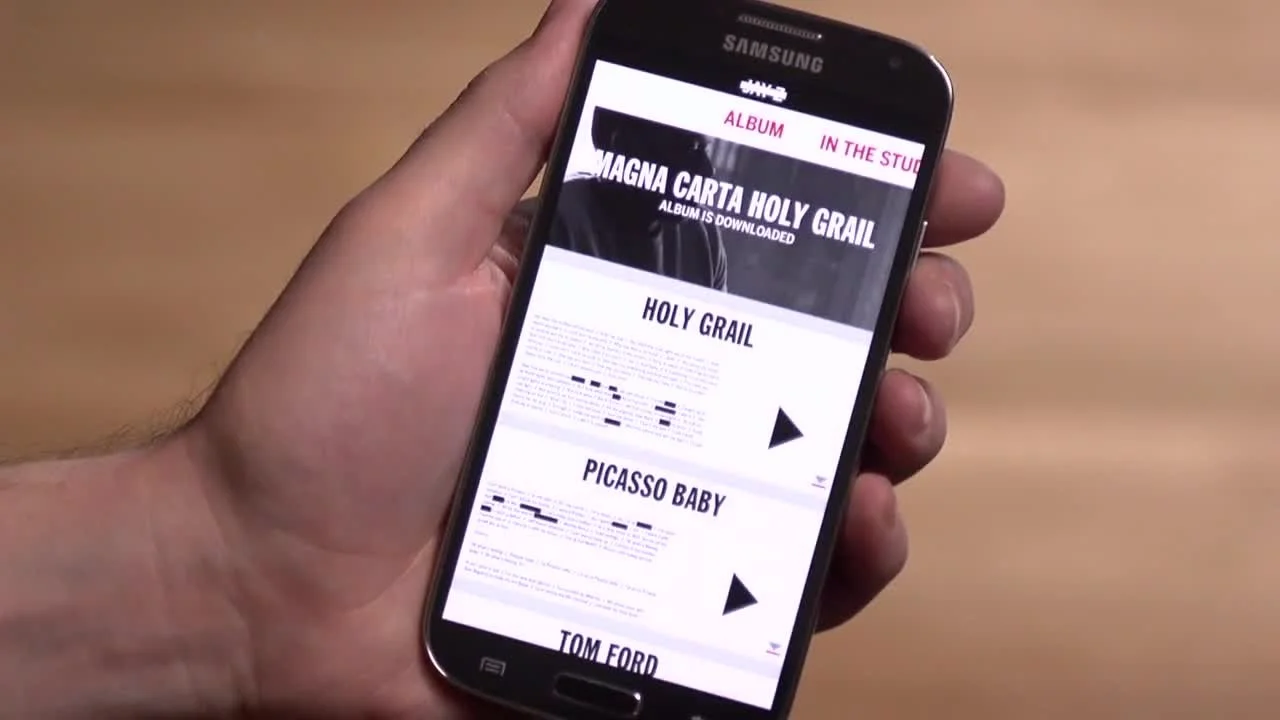
The Magna Carta app wanted access to location data, call logs, installed apps and network connections. Unlocking some of the lyrics required posting to Facebook or Twitter.
Damn. You trying to hear an album or apply for security clearance?
The timing made the permissions even uglier. Edward Snowden’s revelations about government surveillance were barely two weeks old. Ars Technica called the app “positively PRISM-like.” New York Times critic Jon Pareles asked why Jay-Z didn’t simply join the National Security Agency. The Electronic Privacy Information Center filed a complaint with the Federal Trade Commission, arguing that Samsung had failed to disclose what it was collecting clearly enough.
Meanwhile, the commercial kept saying “free.”
The fans brought their attention, their social accounts and whatever their phones were willing to tell Samsung. Jay-Z brought the reason anybody would agree to all that in the first place. Samsung could buy a million albums. It could not buy the relationship between Jay-Z and the people who wanted one, so it rented that too.
Killer Mike saw the permissions and tweeted, “Naw, I’m cool.”
That about covers it.
Please Accept These Terms and Receive This Error Message
At 12:01 a.m. on July 4, a million people tried to download the album. Samsung’s servers crashed.
The promised “White Glove” experience became login failures and error messages. A representative celebrated that they had broken the Internet, which is one way to describe launching an app that does not work. Y’all broke the app.
People had accepted the permissions. Some had connected their social accounts. The album was still sitting on the other side of a server that had tapped out for the evening.
Within hours, Magna Carta Holy Grail leaked. More than 200,000 copies were reportedly downloaded through BitTorrent in one day. The Samsung route required the correct phone, an app, several permissions and functioning servers. The other route required a link.
The music industry had spent years lecturing people about piracy while regularly making the legal experience worse than the illegal one. Samsung managed to add surveillance to the inconvenience.
Platinum Before Anybody Heard It
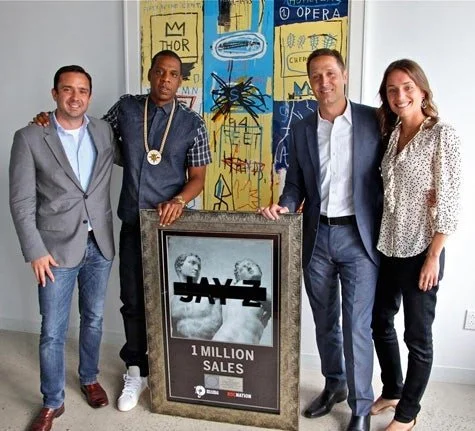
The deal also created a problem for the institutions responsible for deciding what an album sale meant.
The Recording Industry Association of America traditionally waited 30 days before certifying digital releases, a policy left over from the days when retailers could return unsold physical inventory. Samsung had already purchased the copies and had no intention of returning a warehouse full of imaginary CDs, so the RIAA changed its rules. Magna Carta Holy Grail went platinum on release day.
Billboard refused to count Samsung’s million copies toward its charts. Jay-Z wanted to know how a company purchasing albums qualified as cheating.
Fair question.
The retail release debuted at number one anyway, selling 527,000 copies in its first week. Hov had receipts. Anybody arguing that the deal covered for an album nobody wanted had to explain the half-million people who bought it after Samsung already gave away another million.
Commercially, Jay won. The more interesting question was who had become the customer. Samsung purchased the music. Fans received it, promoted it and supplied the campaign with its cultural value. “Artist control” had found a new middleman, and this one arrived carrying a phone.
The U2 Comparison and the Limits of Imposition
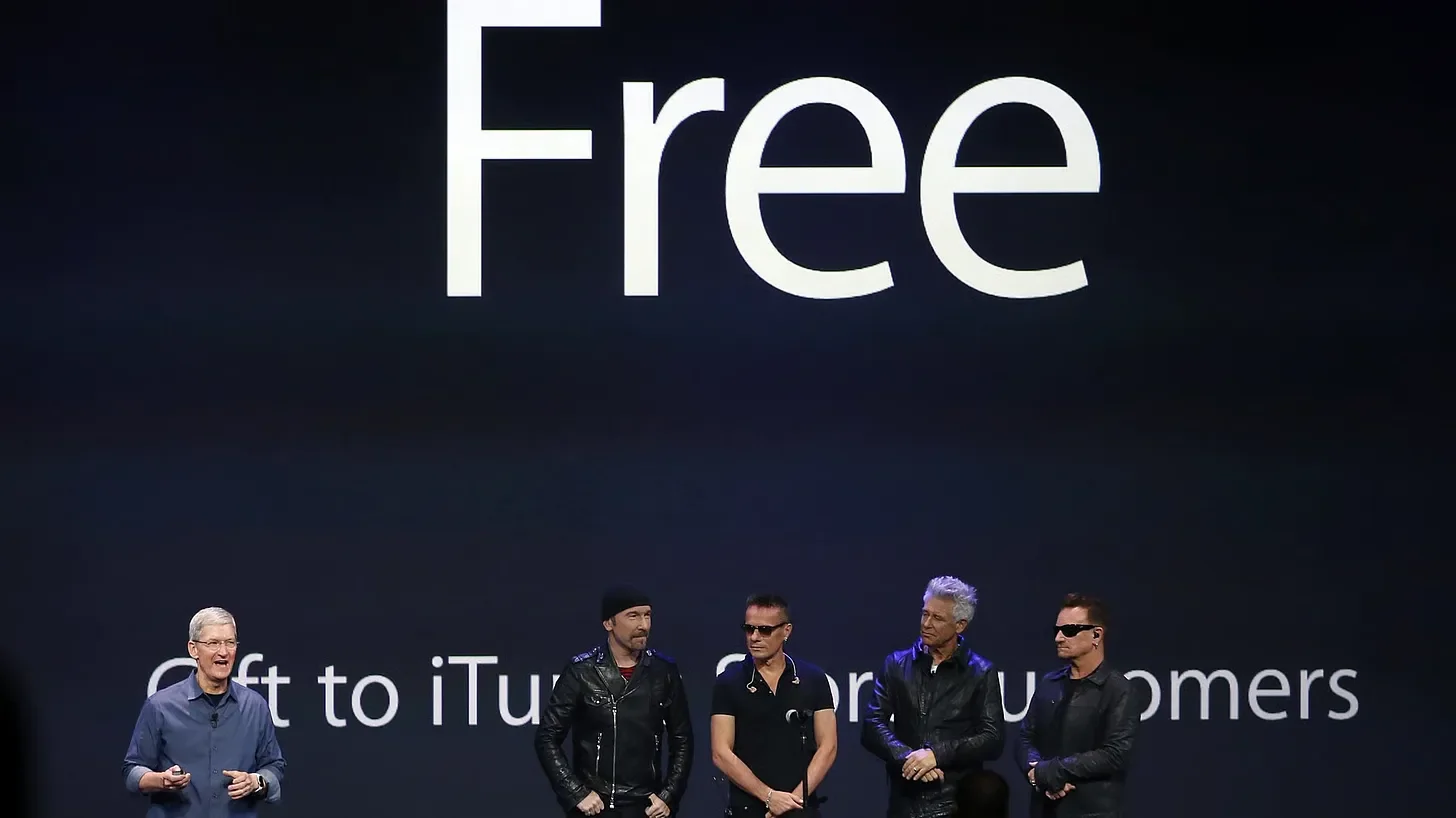
A year later, Apple placed U2’s Songs of Innocence into the libraries of roughly 500 million users. Apple reportedly spent about $100 million on the campaign.
There was no app and no permissions screen. There was also no choice. One morning, U2 was simply in your phone.
People described the experience as being hacked. Apple eventually created a removal tool for users asking, in essence, “Can somebody please get Bono out of here?”
Samsung made people volunteer for a raggedy little trade. Apple skipped the conversation and put the album in the house. I would call Jay-Z’s version more honest because the machinery was visible, except “honest” feels generous for an app requesting call information to deliver “Tom Ford.”
Both companies misread what an artist’s relationship with an audience allows. Loving Jay-Z does not mean trusting Samsung. Owning an iPhone does not mean wanting U2. Cultural credibility ain’t a universal permission slip.
The Part Jay-Z Never Answered
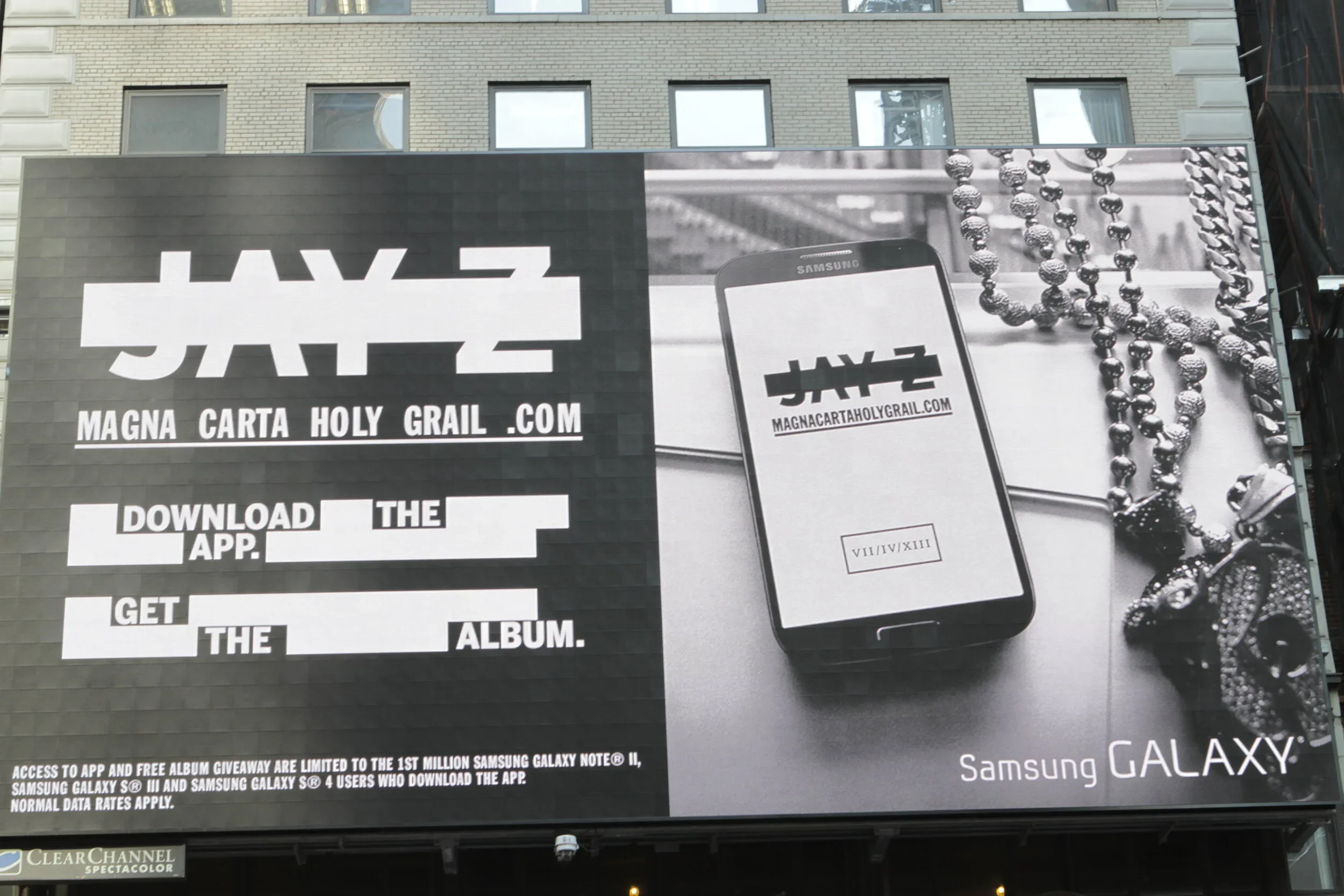
Jay-Z briefly acknowledged the privacy complaints—“Sux, must do better”—then spent most of his energy defending the deal’s legitimacy. That argument was easier. He had the money, the certification, the number-one album and more than half a million traditional sales.
Jay-Z won the argument he wanted to have.
The app raised another one: How much access does an artist get to transfer to a corporation simply because fans want the music? The failed launch made that question impossible to hide behind the commercial. People could see the transaction, and worse, some of them completed their side before Samsung delivered anything.
The “New Rules” helped Jay-Z escape an industry that had spent decades controlling how artists reached listeners. Samsung had its own plans for that access.
Jay-Z understood exactly how much his music was worth to Samsung. The app exposed how much the people who wanted that music were worth too.
That second number was the part nobody put in the commercial.