

What the Dreamcast Controller Thought the Future Would Be
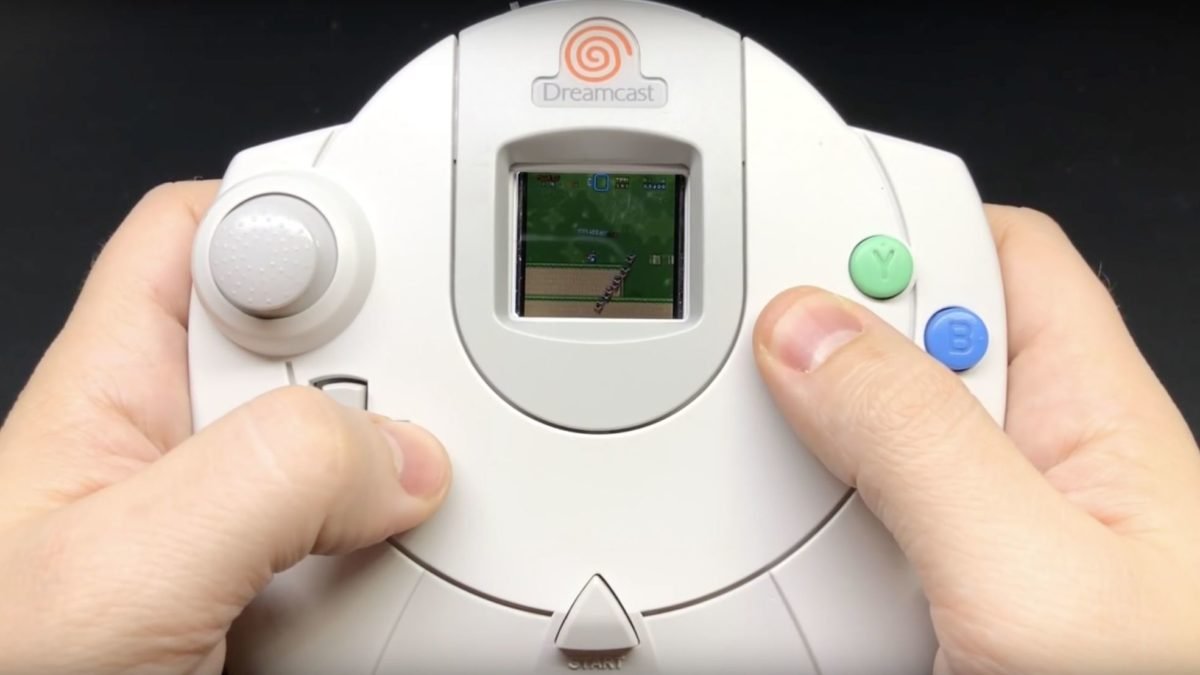
The Dreamcast controller looked like Sega stopped halfway through and decided the rest was your responsibility.
There was the wide, off-white shell, the analog stick, four face buttons and a giant opening in the middle. Slide a Visual Memory Unit into that opening and the controller gained a tiny screen. Underneath it sat another slot for vibration, a microphone or whatever else Sega might cook up later.
The cord came out of the bottom and pointed back at the player, which felt personal. Sega included a groove on the rear so you could redirect it toward the console. Of course, you had to know the groove was there and understand why the wire had arrived facing the wrong damn way.
And after making room for screens, memory, voice and two separate accessories, Sega gave the controller one analog stick.
This thing was doing the most.
Kenji Tosaki, who worked on the Saturn 3D Control Pad before overseeing the Dreamcast controller, VMU and peripheral interface, later called putting the memory unit in the controller instead of the console the most important decision behind the design.
Okay. Now the hole makes sense.
The hole was the whole plan.
Sega Wanted Somewhere to Put the Future
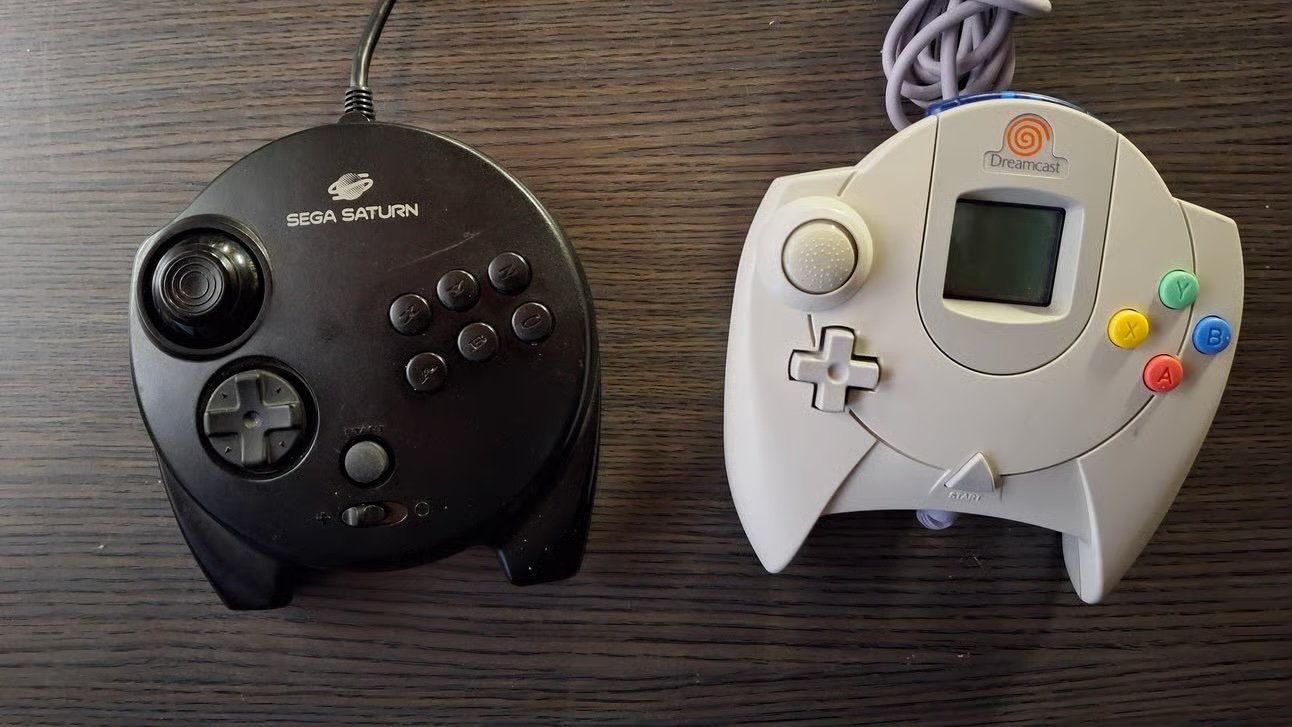
The Dreamcast controller grew out of Sega’s work on the Saturn 3D Control Pad, which introduced an analog stick, rounded grips and rear analog triggers to the company’s hardware.
In March 1996, Sega filed a patent describing a controller that could accept interchangeable expansion units. The proposed modules included vibration, motion sensing, wireless features, displays, clocks, trackballs and steering inputs.
Sega was out here planning for damn near everything.
Patents are wish lists with diagrams, so the document cannot be treated as a blueprint for the final Dreamcast controller. It does show that Sega’s hardware team had started thinking beyond a fixed pad years before launch.
The controller would serve as a host. Games could add capabilities without requiring an entirely different base device.
That idea explains the two slots. Sega expected the first to hold a VMU, leaving the second open for a Jump Pack, microphone or future accessory. Memory came first. Everything else could stack around it.
It also explains why the controller was so big. Expansion slots need space. A visible screen needs space. Long analog-trigger mechanisms need space. Eventually the player has to hold all this space, but we’ll get to that.
The important part is that Sega expected controllers to change with the games. New software might create new forms of interaction, and the controller needed somewhere to put them.
That was a real vision. Sega just had several different futures fighting for the same piece of plastic.
Four Buttons, One Stick and Two Triggers
The controller was designed while the industry was still figuring out how 3D games were supposed to work.
Nintendo had one analog stick, three handles and multiple ways to hold the N64 controller. Sony’s DualShock combined two sticks with integrated vibration. Sega came from an arcade culture that valued controls players could understand before the machine asked for another quarter.
Those backgrounds produced different ideas about what players would need.
Tosaki reportedly wanted the Dreamcast to retain six face buttons. That layout had become part of Sega’s identity, especially through the Genesis and Saturn. Developers, marketing staff and executives pushed for four buttons and simpler controls.
A, B, X and Y won.
The layout was cleaner and closer to the convention emerging across the industry. Fighting-game folks caught a stray. Sega went from the Saturn’s excellent D-pad and six-button setup to a controller less suited to the genre, right as Soulcalibur became one of the best reasons to own a Dreamcast.
That is some nasty timing.
The second analog stick barely entered the conversation. Tosaki says developers never requested one.
The popular story is that Sega removed a second stick to save money. That version gives the company too much credit. It assumes Sega saw what was coming, priced it out and made a bad financial decision.
Nobody asked for one.
That’s wild in hindsight, but it made more sense in Sega’s world. Its developers were used to fixed views, automatic cameras, lock-on systems, racing perspectives and arcade stages where the game controlled much of what the player saw. Camera movement had not yet become a full-time job for the right thumb.
The analog triggers received more attention, and Sega got those right.
The L and R triggers registered a range of movement. In Sega Rally 2, Metropolis Street Racer and F355 Challenge, the analog stick handled steering while the triggers controlled acceleration and braking. Players could ease onto the gas, brake gently or push either input all the way down.
You did not need a tutorial to understand that. Racing already had acceleration and braking. Sega gave both actions more expression and placed them under fingers that were sitting there doing nothing.
That setup traveled well. The original Xbox and GameCube continued the analog-trigger idea, and modern controllers made it standard. Sega’s biggest contribution to the future of controllers may have been the part nobody needed to look at.
Meanwhile, the VMU was sitting in the middle with a screen, buttons, batteries and something to say.
The VMU Wanted Every Job
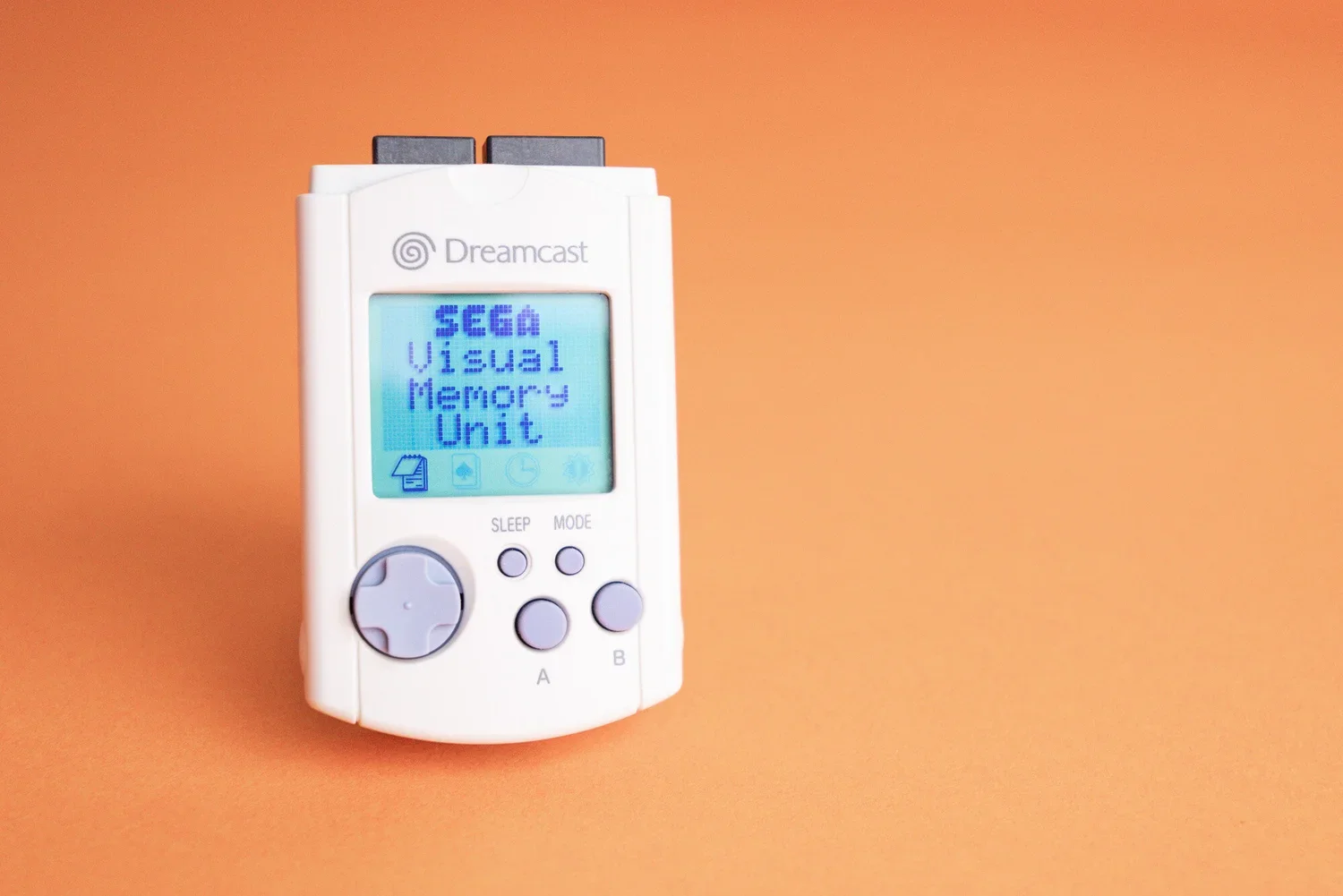
The Visual Memory Unit stored save data, displayed information, played portable minigames, kept time, made sounds and connected directly to another VMU.
That little joint was ambitious.
More importantly, it moved player information into the object the player held. Four people could bring four VMUs, each carrying separate saves and data. Progress belonged to the player instead of remaining attached to one console.
This followed the basic logic of a player account before console accounts became normal. The technology remained physical as hell—lose the VMU in somebody’s couch and there went the cloud—but the relationship had changed. Your data traveled with you.
NFL 2K gave the screen one of its best uses. Players could choose plays privately on the VMU, keeping them off the shared television. If y’all are sitting beside each other calling football plays, a private screen solves an actual problem.
Sonic Adventure took the portable side further. Players could transfer Chao creatures to the VMU and interact with them away from the Dreamcast. The memory card carried a small piece of the game beyond the television.
Then Seaman used the controller’s other slot for a microphone, turning the expansion system into the connection point for voice interaction.
All three ideas were interesting. They also had almost nothing to do with each other.
One game wanted a private screen. Another wanted a tiny handheld. Another wanted a microphone port. Developers kept receiving the same hardware and inventing a new reason for it to exist.
That made the VMU exciting from game to game and incoherent across the platform.
What belonged on the screen? Plays? Health? Maps? Notifications? Portable games? A little character animation letting you know, yes, the memory card was still in there?
The Dreamcast library tried all of it.
The hardware imposed limits too. The small monochrome screen sat below the player’s normal line of sight. Looking at it required looking away from the television, which worked during football play selection and made less sense while something was trying to kill you.
Portable use drained the batteries. The VMU would then holler about its battery life with a beep that had more endurance than the batteries did.
Developers had to build the extra experience. A meaningful VMU feature required another interface, more programming and more testing. Plenty of games settled for save icons, status information or simple animations because, look, these folks had a whole game to finish.
The strongest VMU features remained attached to individual titles. Players never developed one expectation that applied across the library.
That is the difference between an invention and a convention. An invention proves something can happen. A convention becomes the thing everybody assumes will happen.
The VMU stayed in the first category.
All That Future Was Heavy
Sega’s expansion strategy shaped the controller’s ergonomics.
Two slots, a visible VMU screen, trigger travel and accessory circuitry widened the shell. Add a VMU and Jump Pack, and now the controller had some weight on it too.
The player’s hands sat far apart. Long trigger holds could become tiring. The D-pad was a clear step backward from Sega’s Saturn pads.
How comfortable the controller felt depended heavily on the game. Racing titles used the analog stick and triggers well. Sports games benefited from simple face buttons and, occasionally, the VMU. Arcade-style games such as Power Stoneand Virtua Tennis fit Sega’s preference for quick, readable controls.
Fighters exposed the D-pad and four-button compromise. Shooters exposed the lonely analog stick.
And then there was that cord.
Because it came out toward the player, Sega added a groove that redirected it toward the console. The manual documented the feature. Owners who found it got a clever cable-management solution. Everybody else had a wire pointing at their stomach.
If your hardware decision requires people to discover the explanation in a manual, you may have created a second problem while solving the first one.
That happened a lot with this controller. The size supported expansion, but the hands felt the size. The VMU created new possibilities, but developers had to create uses for them. The cable groove worked, but folks had to find it.
Sega’s ideas were rarely random. They just asked a lot from everybody after the idea left the design room.
The Right Thumb Wins
The single analog stick worked within plenty of late-1990s games. Automatic cameras, fixed perspectives, lock-on systems and recentering buttons handled the rest.
Sonic Adventure relied heavily on an automatic camera, and it could be dramatic when the level and camera agreed on where Sonic should go. Every now and then, the camera had its own plans. Anybody who played 3D games during that period knows how that story ends.
Rayman 2 assigned a control to bringing the camera behind the character. Other games mapped camera movement onto face buttons or triggers.
Then games such as Quake III Arena showed where all these workarounds were headed. The Dreamcast supported controllers, keyboards, mice and specialty peripherals. If you wanted precise simultaneous movement and aiming, the standard controller was gonna make you earn it.
By the early 2000s, shooters and third-person action games expected players to control direction and perspective at the same time. Camera control had joined movement as a continuous activity. Sony had already placed the answer under the right thumb.
Sega’s timing deserves some fairness. The Dreamcast controller began development while dual-stick play remained one approach among several. Its arcade culture produced excellent games built around simpler controls and software-managed cameras.
The market moved fast, though. Real fast.
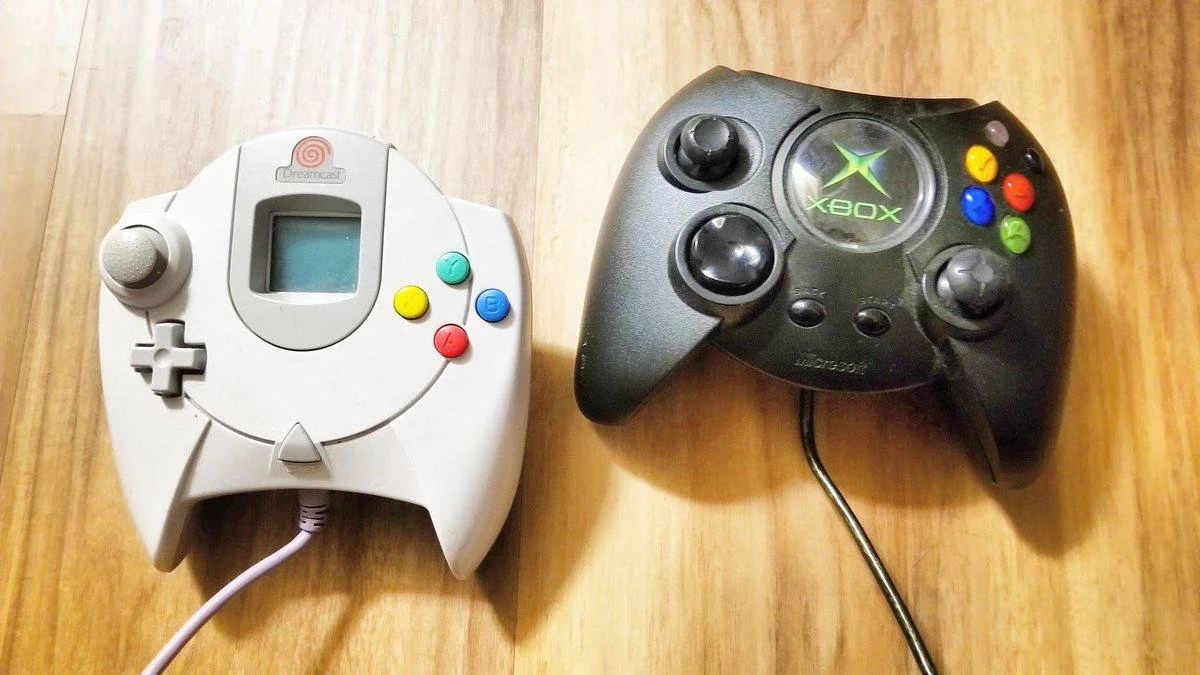
Microsoft kept several of Sega’s useful ideas when developing the Xbox. Early Xbox controller concepts carried a clear Dreamcast influence, and Xbox co-creator Seamus Blackley later explained that “Dreamcast was king” during the team’s early thinking.
The shipping Xbox controller used A, B, X and Y buttons, analog triggers, controller-mounted memory units and a large grip-oriented body. Microsoft added two sticks and integrated vibration.
They kept the good stuff and kept it moving.
Calling the Xbox controller a Dreamcast copy oversimplifies the design history. Blackley has said the earliest concepts were discarded as the Xbox pad became its own product. Still, Dreamcast helped define the starting point.
The triggers survived. The memory slots lasted for a while. The VMU screen stayed behind.
And, yes, Microsoft found room for the other stick.
What Sega Thought We Would Need
The Dreamcast controller expected gaming to become more personal, portable and expandable. Sega was right about a lot of that.
What it could not predict was the order of importance.
A tiny screen could create private information. Portable memory could give each player an identity. Expansion slots could support microphones and vibration. All useful ideas.
But when 3D games made simultaneous movement and camera control part of the basic language, that second stick stopped being an optional future feature.
That is why the controller remains so interesting. The VMU shows the future Sega was reaching for. The triggers show the part it nailed. The empty space under the right thumb shows how quickly one missed assumption can age everything around it.
Twenty-five years later, folks still want to talk about that little screen. Then they start playing, reach for a camera stick that ain’t there, and remember just how far into the future Sega could actually see.