

Ernestine Eckstein: The Black Lesbian Activist History Forgot
There is a photograph taken on October 23, 1965, outside the White House. A small line of protesters walks quietly on the sidewalk, carrying signs, dressed with deliberate care, suits and ties on the men, skirts on the women. They are staging one of the first public demonstrations for gay rights in American history, and most of them have arranged themselves to be as invisible as possible, even while being visible. Then your eye catches her.
Fourth from the front, in white sunglasses, carrying a sign that reads "DENIAL OF EQUALITY OF OPPORTUNITY IS IMMORAL", is a young Black woman. She is 24years old. She is, according to all available historical records, the only person of color on the picket line. She is also among the youngest, the most stylish, and by any account among the most strategically sophisticated thinkers in the room.
Her name was Ernestine Eckstein. You have almost certainly never heard of her. That is history's failure, not hers.
Who She Was
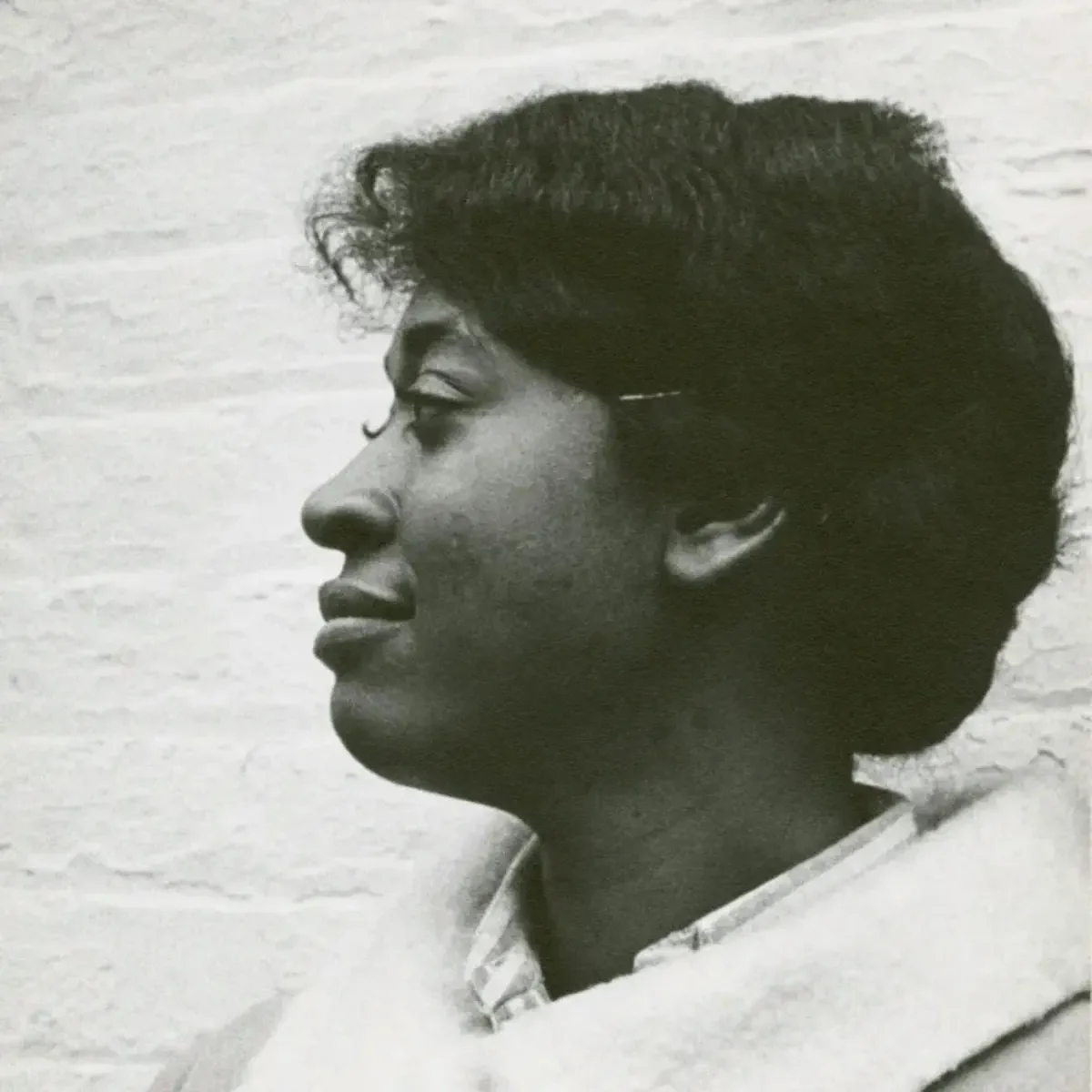
Ernestine Delois Eppenger was born in South Bend, Indiana, in 1941, one of eight children. She graduated from Indiana University in 1963 with a degree in magazine journalism, minors in psychology and Russian, a record of involvement in the NAACP, membership in a scholastic honor society, bylines in the campus newspaper, and a place in the Singing Hoosiers. She was, by all evidence, a person of tremendous intellectual range who had spent her college years taking the world seriously.
She moved to New York City in May 1963, at 22. And it was there, for the first time, that things clicked into place about her own identity. She had been emotionally close to female teachers and friends throughout her life, feeling something she couldn't name, but the concept itself had been entirely absent from her Indiana upbringing. As she later explained in her own words: "This was a kind of blank that had never been filled by anything, reading, experience, anything, until after I came to New York."
A gay male friend from Indiana, who had come out to her back home, reintroduced himself in New York as someone very different. Freer. More himself. He introduced her to the city's gay community. "He sort of introduced me to the homosexual community," she recalled later, laughing at the memory. "Cuz he's a real queen. I mean here. He was a little bit different here in New York than he was in Indiana."
Once she understood what she was, her response was immediate and characteristic. As she put it: "The next thing on the agenda was to find a way of being in the homosexual movement."
Into the Movement
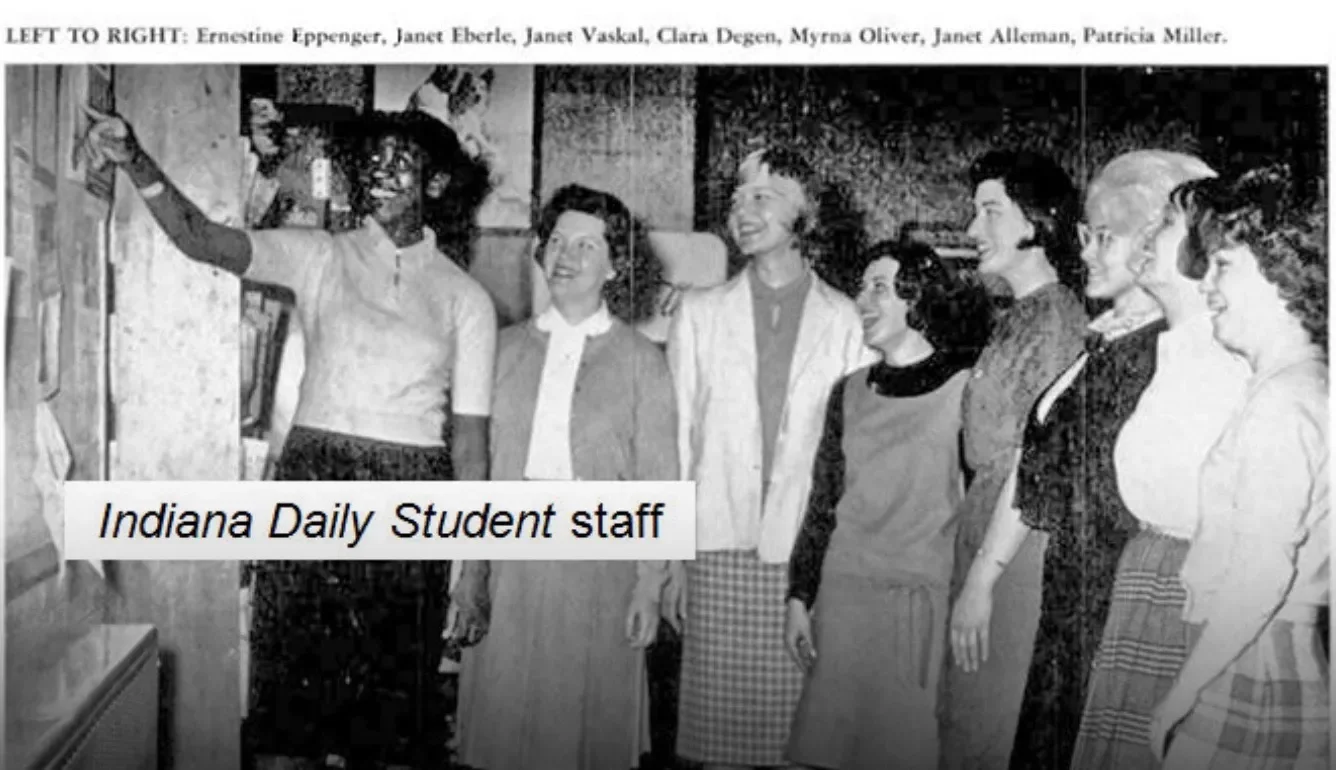
She found her way through the same path many did in those years: a Village Voice advertisement for Mattachine Society lectures. The Mattachine Society led her to the Daughters of Bilitis, DOB, the first lesbian organization in the United States, which had been founded in San Francisco in 1955 and by the early 1960s had a New York chapter.
Eckstein also joined CORE, the Congress of Racial Equality, after moving to New York. She understood the NAACP, which she had worked with in Indiana, as "structured with the white liberals in mind." CORE was more direct action-oriented, more willing to put bodies in the street. That experience shaped everything about how she approached the homophile movement.
She walked into DOB with a strategic framework that the organization had largely never encountered. The dominant approach among DOB's leadership, the "old guard," as it was known, was to pursue change through negotiation with medical professionals and psychiatrists, to argue that homosexuality was not a mental illness, to work patiently within institutional channels. There would be no demonstrations, no pickets, nothing that might scare off the respectable authorities the organization was trying to cultivate. The DOB's official position was essentially: we need doctors and psychologists to take our side before we take our case to the public.
Eckstein thought this was exactly backwards.
What She Brought That Nobody Else Had
The civil rights movement had demonstrated something concrete in the years before Eckstein arrived in New York: that public protest worked. Not immediately, not without cost, but systematically and irreversibly. Sit-ins changed policy. Marches changed public consciousness. Direct action forced institutions to respond in ways that polite petitioning never did. Eckstein had absorbed this as operating knowledge through years of actual organizing, not theory.
She brought that knowledge into spaces where it was urgently needed and largely unwelcome.
Her appointment as Vice President of the New York chapter of DOB was a deliberate strategic move by the activist wing of the organization, a recognition that something needed to change. Historian Marcia Gallo wrote of Eckstein's explicit plan: "to reach out to women who saw the gay struggle as linked to other civil rights issues and hope that during her time as vice president of the local chapter she would help build a more social action oriented group."
The key phrase is "linked to other civil rights issues." Eckstein was arguing for different tactics and for a different understanding of what the struggle was. The homophile movement's prevailing self-image was that gay people were a misunderstood minority seeking acceptance from mainstream institutions. Eckstein's framing, shaped by the civil rights movement, was that gay people were a persecuted group with civil rights that were being denied, and that the appropriate response was not to ask for understanding but to demand equality. The distinction sounds subtle. It was in practice enormous.
She was specific about the targets: "the discrimination by the government in employment and military service, the laws used against homosexuals" and "the rejection by the churches." Not abstract acceptance. Concrete, named forms of discrimination with concrete remedies. The government fires people for being gay, that needs to stop. The military discharges gay service members, that needs to stop. The law criminalizes gay existence, that needs to stop. Eckstein wanted the movement to stop asking psychiatrists to vouch for its members' psychological health and start demanding that institutions stop breaking the law.
The Picket Lines

In 1965, Eckstein put herself on picket lines at a moment when almost no gay or lesbian activist in America was willing to do so publicly.
On July 4th, she marched in Philadelphia in the first Annual Reminder Day demonstration at Independence Hall, one of the earliest public demonstrations for gay rights in American history. On October 23rd, she marched in front of the White House. She was, at both demonstrations, the only person of color present. She was also one of the only women at the White House picket.
The organizing rules for these demonstrations were strict: women wore skirts, men wore suits and ties, everyone marched quietly in orderly lines. The logic was the politics of respectability, present gay people as indistinguishable from straight people, give the watching public no reason to dismiss you. It was a calculated strategy shaped by the real dangers of the era, and Eckstein understood the logic even while pushing beyond it.
When Barbara Gittings and Kay Lahusen, the pioneering activist couple who ran The Ladder, asked Eckstein whether she was considered a radical among lesbians, her answer revealed exactly how she saw herself: "I personally consider myself, um, very average and normal in every sense of the word. Not radical, but just simply… this to me is the way to be. Now, I think, compared to other lesbians, my ideas are farther to the left than theirs are. Most lesbians that I know endorse picketing but would not themselves picket. So as far as ideas are concerned, maybe we're on the same line, but I sort of go a little bit beyond it in that I will get on the picket line, in a different city."
The laconic clarity of that last phrase is striking. She didn't just believe in picketing. She actually picketed. In a different city. Under her real name. As a Black woman. In 1965.
The Interview That Became a Cover
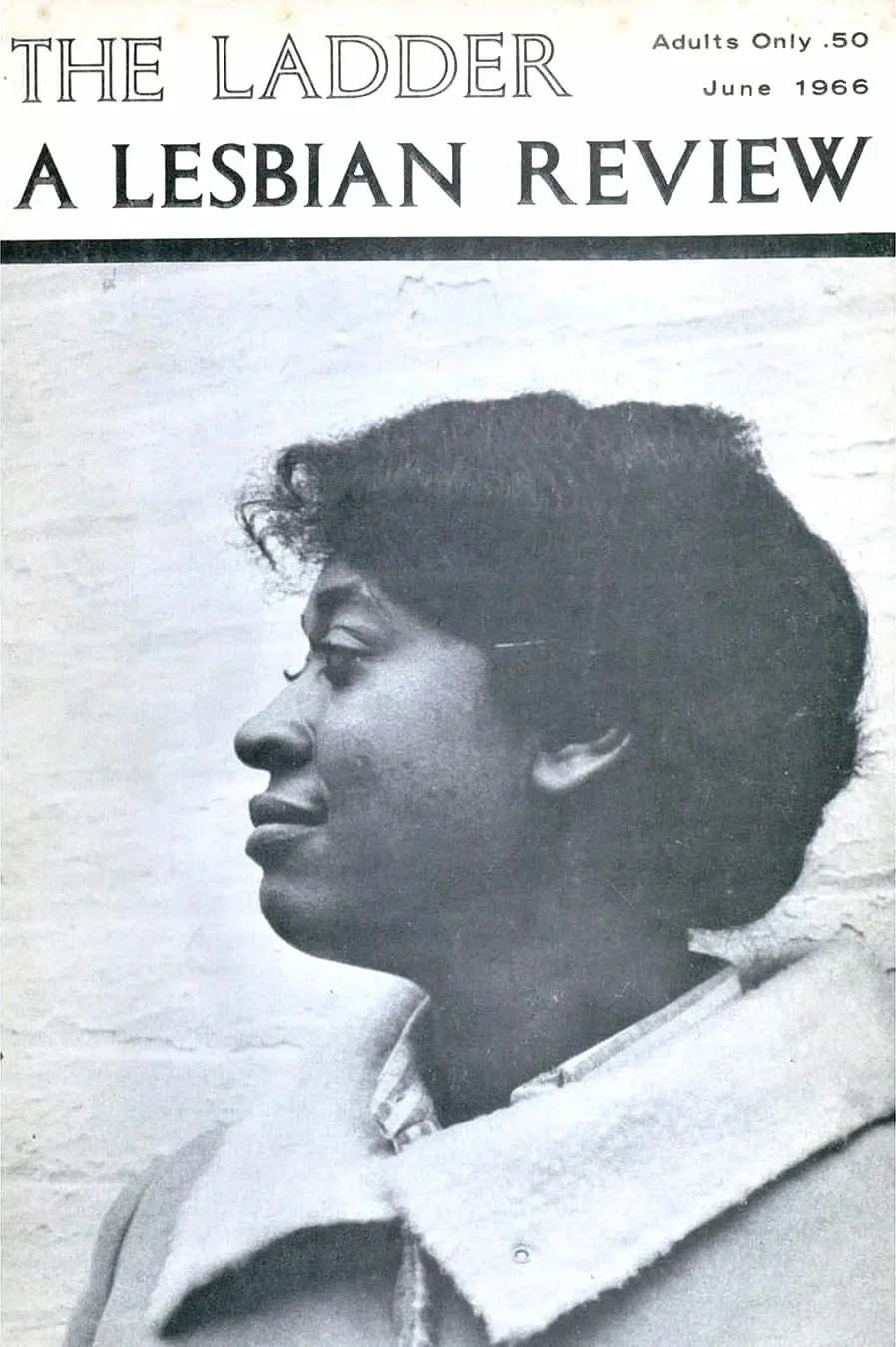
In 1965, Barbara Gittings and Kay Lahusen sat down with Eckstein for an interview that would run in The Ladder. The conversation went for five or six hours and was recorded on tape. The published version appeared in the June 1966 issue. With it came something that had never happened before in the magazine's history: a Black woman on the cover.
The Ladder had begun showing real photographs of lesbians on its covers only in 1964, when Gittings became editor and decided that the magazine should stop hiding its readers behind line drawings. Putting a face on lesbianism was itself a radical act. Putting a Black face on it, presenting a Black woman as the representative image of the lesbian rights movement, in 1966, was something beyond radical. It was a statement about who this movement was for and who it included, made by a publication that the dominant culture would have preferred not to acknowledge existed at all.
Historian Marcia Gallo described the impact directly: Eckstein's cover image "helped greatly to complicate notions of the kinds of women who were involved in DOB and expanded definitions of lesbian identity." Which is a careful, scholarly way of saying: Ernestine Eckstein on that cover made it impossible to pretend the lesbian rights movement was exclusively white, exclusively middle-class, exclusively oriented toward respectability and assimilation. She complicated the story simply by being in it.
The interview itself was the most substantial published piece Eckstein ever gave. It is, alongside the photographs, the primary document through which historians have reconstructed her role.
The Battle Inside DOB
What Eckstein was fighting for within the Daughters of Bilitis was a complete reorientation of the organization's theory of change. The old guard wanted to keep working with doctors and psychologists, keep negotiating with institutions, keep the membership safe from public exposure. Eckstein wanted the movement to go to the people, through demonstrations, through courtroom action, through the kind of broad public engagement that had driven progress in the civil rights movement.
She tried to bring Frank Kameny, the gay rights pioneer who had co-founded the Mattachine Society of Washington and would later coin the phrase "Gay is Good", to speak at the New York DOB chapter headquarters. Eckstein wrote to Kameny in February 1966 explaining her purpose: "I want you to be free enough to say whatever you want, so to speak, about any aspect of the movement. Keep in mind my particular aim: to get these people to realize there is such a thing as the homophile movement and possibly begin to develop a fuller concept of themselves as part of it."
The old guard overruled her. Kameny was disinvited. The letter informing him arrived five days after Eckstein's invitation.
That episode captures the whole frustration of her position. She had the vision, she had the strategic framework, she had the external connections. She was Vice President. And the organization still blocked her at every turn. The DOB's national leadership pulled the New York chapter out of the East Coast Homophile Organization in June 1965 specifically because that coalition was increasing its involvement in public protests, exactly the direction Eckstein was pushing toward.
She resigned as Vice President by mid-1966. Former DOB members later told historians that she had simply "gotten tired of all the political wrangling and disagreements within DOB over strategies and tactics" and wanted "more political organization." That's a generous reading. She wanted to build something, and the organization kept handing her a bucket of sand.
The Photo and What It Means
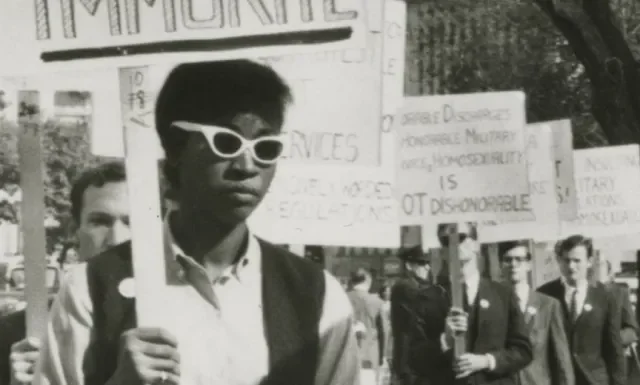
Historian Marcia Gallo, who rediscovered Eckstein's story while writing her dissertation on the Daughters of Bilitis in 2002, described the experience of first seeing the White House photograph: "Those great photos of her, the only woman and the only Black person on the picket line with, wearing those white sunglasses. And perhaps she didn't know how iconic that photo would become. I'm sure she didn't. But it has, and she just jumps off the page at you because she's gorgeous and she's a Black woman wearing a sign about 'denial of equality is immoral.' I mean, she's amazing."
What Gallo is responding to, beyond the purely visual fact of the image, is the weight of what it represents. A Black woman who was also a lesbian occupied two identities that American society in 1965 was systematically trying to erase. She faced state violence, police harassment, legal discrimination, and social annihilation from multiple directions simultaneously. And she showed up at the White House carrying a sign. She used her full name rather than a pseudonym, at a time when being identified in public as a homosexual could mean the end of your career and your family's safety.
She described herself, in that 1965 interview, as a "social prophet." Marcia Gallo's response to hearing that self-description was simple: "I couldn't agree more."
After New York
By 1968, Eckstein had left New York for Northern California and effectively left the gay rights movement behind. She joined Black Women Organized for Action, BWOA, a San Francisco Bay Area organization co-founded in 1973 by 15 Black women including Aileen Hernandez, focused on addressing the near-total absence of Black women from local feminist organizing. The group emerged from Black Women Organized for Political Action, which had grown out of the frustrations of Black women who found themselves marginalized in both the civil rights movement and the white-dominated women's movement.
Eckstein's trajectory makes complete sense in retrospect. She had been doing intersectional political organizing before that word existed, holding together her identity as a Black woman and as a lesbian, understanding that the systems of oppression were connected, trying to build movements that reflected that understanding. When the gay rights movement couldn't accommodate her vision of what it needed to become, she went somewhere that could.
After her years with BWOA, she largely disappeared from the historical record. This is one of the ways history punishes people who operate at intersections: there was no single community that fully claimed her, so no single community fully preserved her story. The gay rights movement's archives were largely built by white activists documenting white activism. The Black feminist movement's archives documented its own story. Eckstein fell between them.
She died in 1992, at 51. She died before the rediscovery of her story had really begun.
Why She Matters
The recovery of Ernestine Eckstein's history is recent, incomplete, and ongoing. The five-or-six-hour tape of her 1965 interview with Barbara Gittings and Kay Lahusen sat in Barbara's papers at the New York Public Library for decades before historian Marcia Gallo found it in 2002. The Making Gay History podcast gave her voice a new audience in 2019; the first time most listeners had ever heard her speak. Researchers continue to piece together the outlines of a life that left frustratingly few traces.
What we can say with confidence is this: Ernestine Eckstein was arguing in 1965 for things the gay rights movement wouldn't fully embrace until years later. She understood that public visibility mattered. She understood that the strategy of working through medical and psychiatric institutions was fundamentally limited and that the movement needed to go directly to the public and to government. She understood that gay rights was a civil rights issue connected to other civil rights struggles, not a special case to be handled quietly by professionals. She saw linkages that most of the movement wasn't yet prepared to see.
She was also the physical embodiment of the movement's broadest possible self; a Black lesbian in a space that was overwhelmingly white and skewing toward professional-class respectability. Her presence on those picket lines, and on that magazine cover, made a claim about inclusion that the movement hadn't made for itself. It said: this struggle belongs to all of us.
The fact that she was largely forgotten, that most histories of the pre-Stonewall era passed over her or mentioned her in a single sentence, tells us something important about how movements construct their own histories. They tend to preserve the stories that confirm the narrative the movement wants to tell about itself: unified, progressive, building toward victory. Ernestine Eckstein was a more complicated story. She was someone who saw clearly what needed to happen and was repeatedly blocked from making it happen by the very movement she was trying to push forward. She left. She went somewhere else. That doesn't fit neatly into the arc of triumph.
But she was there. Carrying her sign. In white sunglasses. The only Black woman at the White House, in 1965, demanding equality. Years before Stonewall. Years before anyone had decided to remember.
References
Primary Sources
Eckstein, Ernestine. Interview conducted by Barbara Gittings and Kay Lahusen. The Ladder 10, no. 9 (June 1966): 4–11. Available via Alexander Street Press/GLBT Historical Society.
Eckstein, Ernestine. Letter to Frank Kameny, February 12, 1966. Kameny Papers, Library of Congress.
Photographs by Kay Tobin Lahusen, 1965 White House picket and 1965 Annual Reminder Day. Manuscripts and Archives Division, The New York Public Library.
Secondary Sources
Gallo, Marcia M. Different Daughters: A History of the Daughters of Bilitis and the Rise of the Lesbian Rights Movement. Seal Press, 2007.
D'Emilio, John. Sexual Politics, Sexual Communities: The Making of a Homosexual Minority in the United States, 1940–1970. University of Chicago Press, 1983.
Online and Institutional Sources
Marcus, Eric. "Ernestine Eckstein." Making Gay History: The Podcast, Season 4, Episode 9 (2019). https://makinggayhistory.org/podcast/ernestine-eckstein/
NYC LGBTQ Historic Sites Project. "Ernestine Eckstein Residence / Allen Ginsberg Residence." https://www.nyclgbtsites.org/site/ernestine-eckstein-allen-ginsberg-residence/
Cold War, Lavender Scare, and LGB Activism. U.S. National Park Service. https://www.nps.gov/articles/000/cold-war-lavender-scare-and-lgbtq-activism.htm
Bedwell, Michael. "Black Lesbian Ernestine Eckstein Was Protesting for Gays Before Others Thought Protests Were Possible." LGBTQ Nation, October 2019.
Costello, Emily. "Trailblazing Woman: Ernestine Eckstein." Made With Lev, February 2025. https://www.madewithlev.com/trailblazing-woman-ernestine-eckstein/
Stonewall 50 — Episode 1: Prelude to a Riot. Making Gay History. https://makinggayhistory.org/podcast/stonewall-50-episode-1-prelude-to-a-riot/