

Role: Visual Interaction Designer
Duties: UX design, interaction design, user flows, prototyping
The Problem
Checkout is where digital commerce breaks. A user re-enters card details they've already typed somewhere else. They hit a password they've forgotten twice. They're asked to trust a payment processor they've never heard of, backed by a security badge that doesn't actually tell them anything. Every one of those moments is friction, and friction at checkout doesn't get forgiven, it gets abandoned.
From the business side the cost is just as real: lower conversion, longer time to close, and users who don't come back to try again. The question behind this project was whether a bank-backed digital wallet could actually remove that friction, without becoming one more account to manage or one more thing to learn.
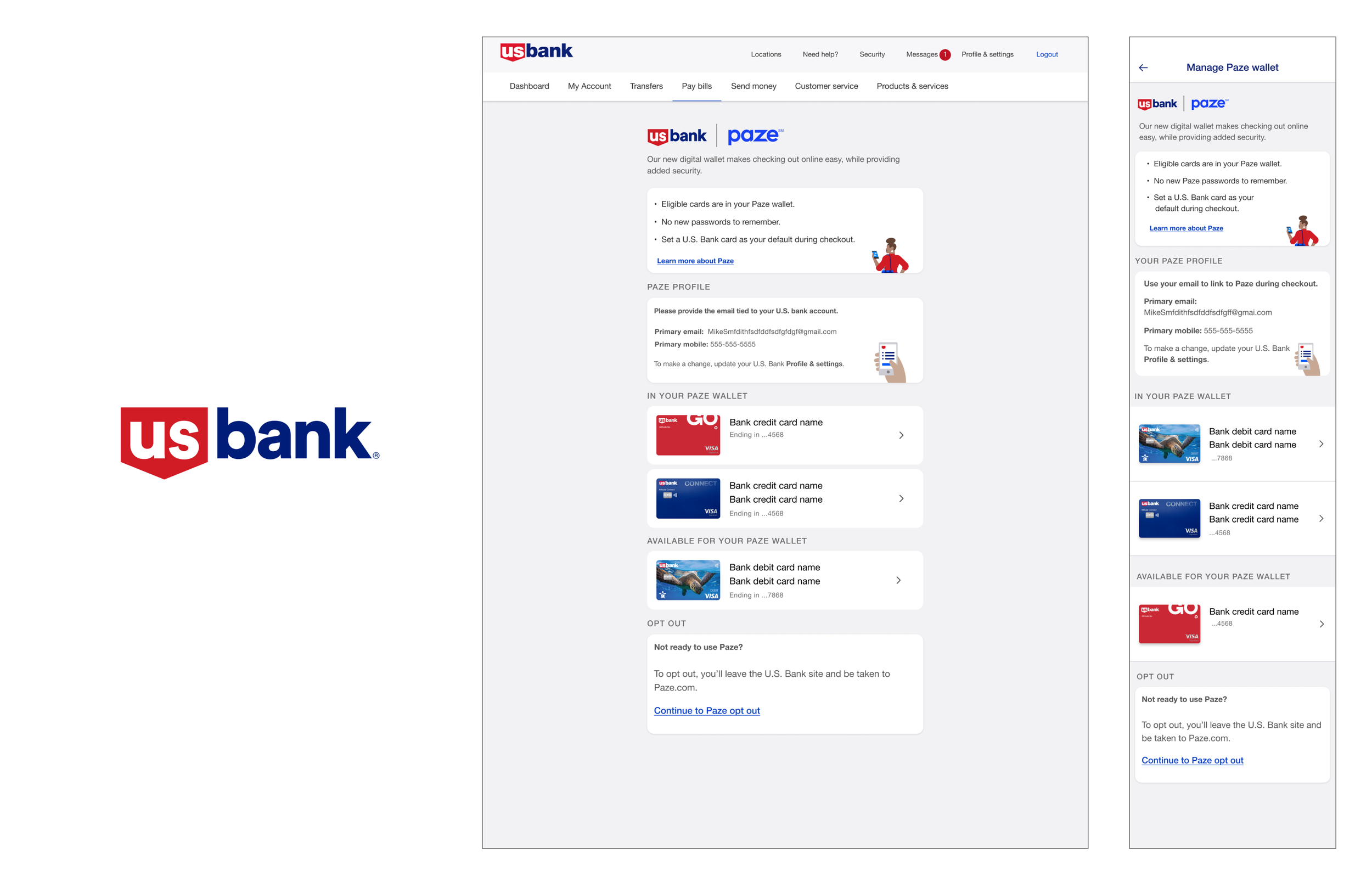
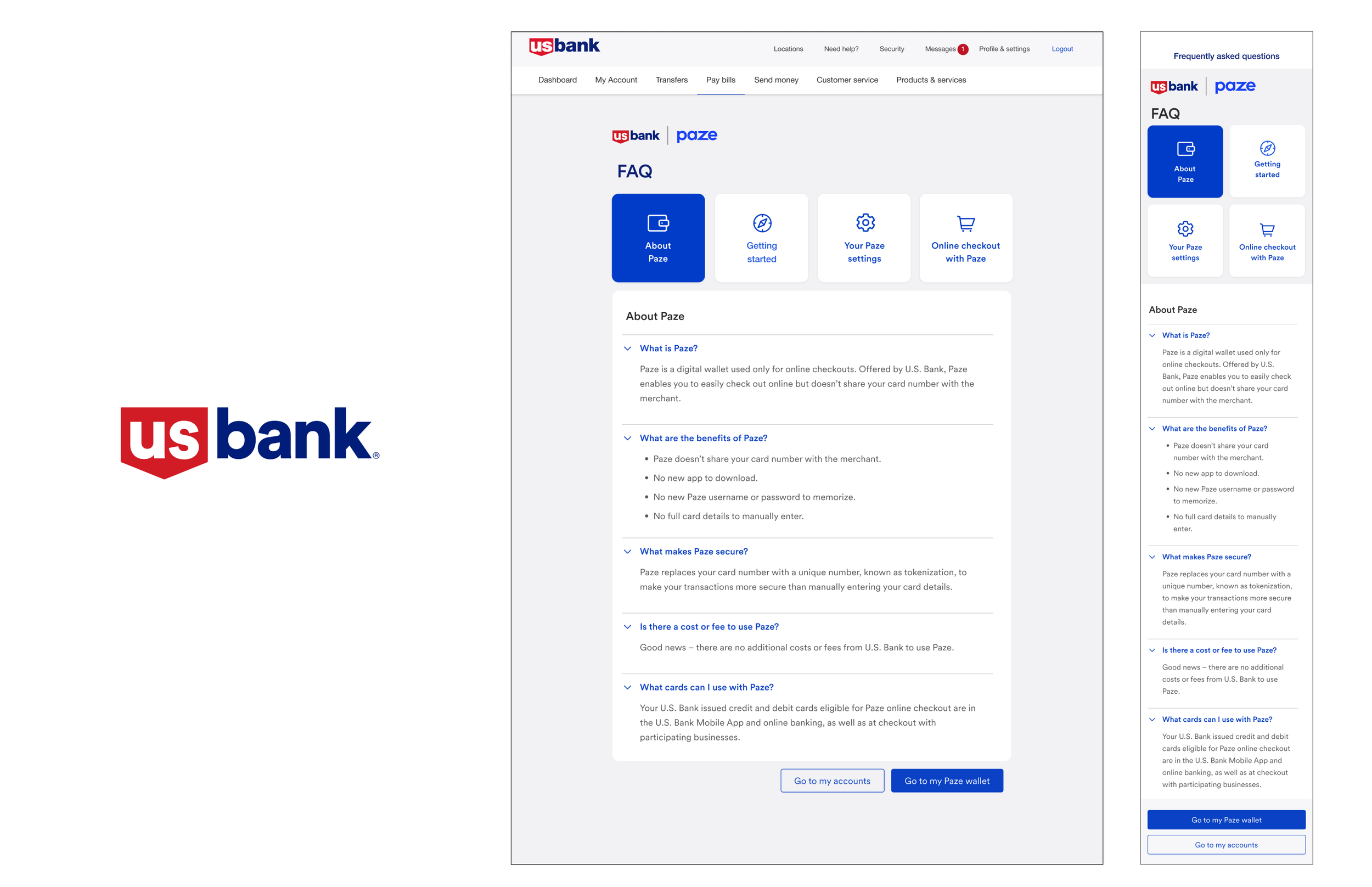
The Design Decision
The instinct with a project like this is to make payment faster. That's not quite the right target. The actual target was to make payment feel inevitable, the kind of interaction where a user doesn't consciously register that a decision was even required. Speed is a side effect of that, not the goal itself.
Three things had to be true for that to work. Cards needed to show up automatically through the bank a user already trusts, instead of being re-entered by hand. Biometrics needed to replace passwords entirely, since a forgotten password is the single biggest point of checkout abandonment there is. And every remaining step needed to read as a small, clear choice rather than a form to fill out.
The line I kept coming back to while designing this: it should feel like something the bank is doing for you, not something a startup is selling to you. That distinction shaped almost every decision after it.
The Entry Point
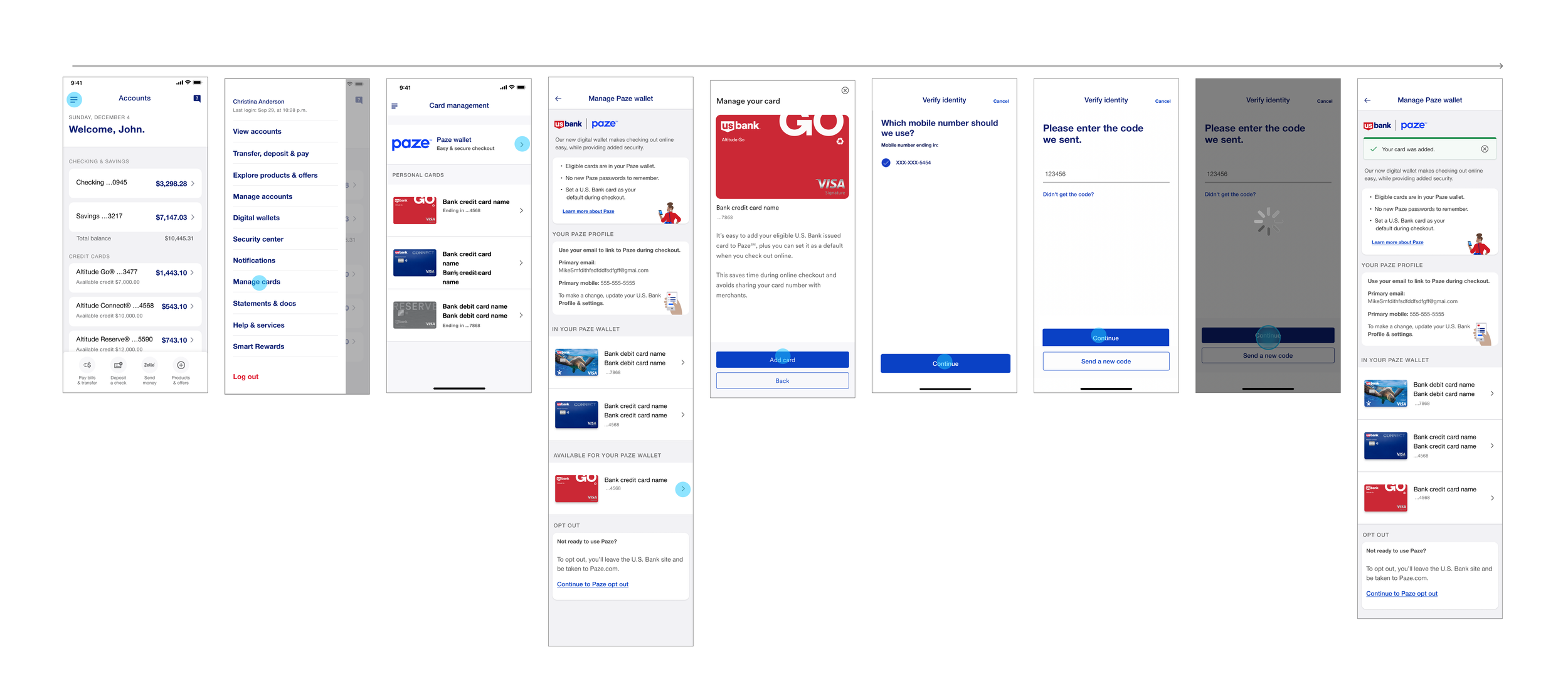
Before asking anyone to authenticate, the entry point had one job: answer the questions a skeptical user would ask before they had to ask them. This is bank-backed, not a third party standing between you and your money. There's no password, biometrics replace it entirely. And it's safe, shown through exactly how authentication happens rather than asserted through a badge or a lock icon.
Treating reassurance as a real feature, not an afterthought tacked onto the login screen, is what reduces drop-off at the exact moment it matters most, right before someone hands over their money.
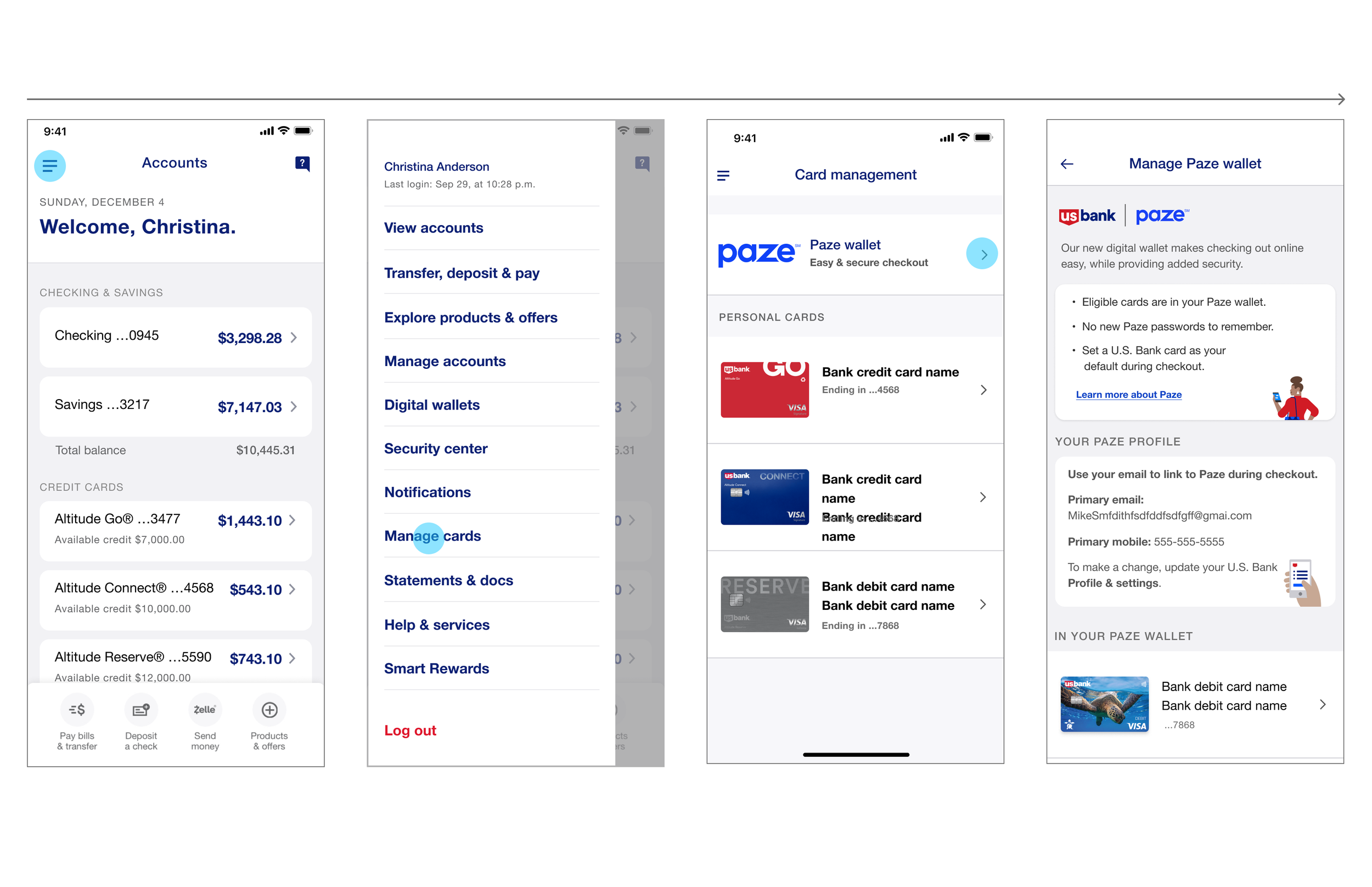
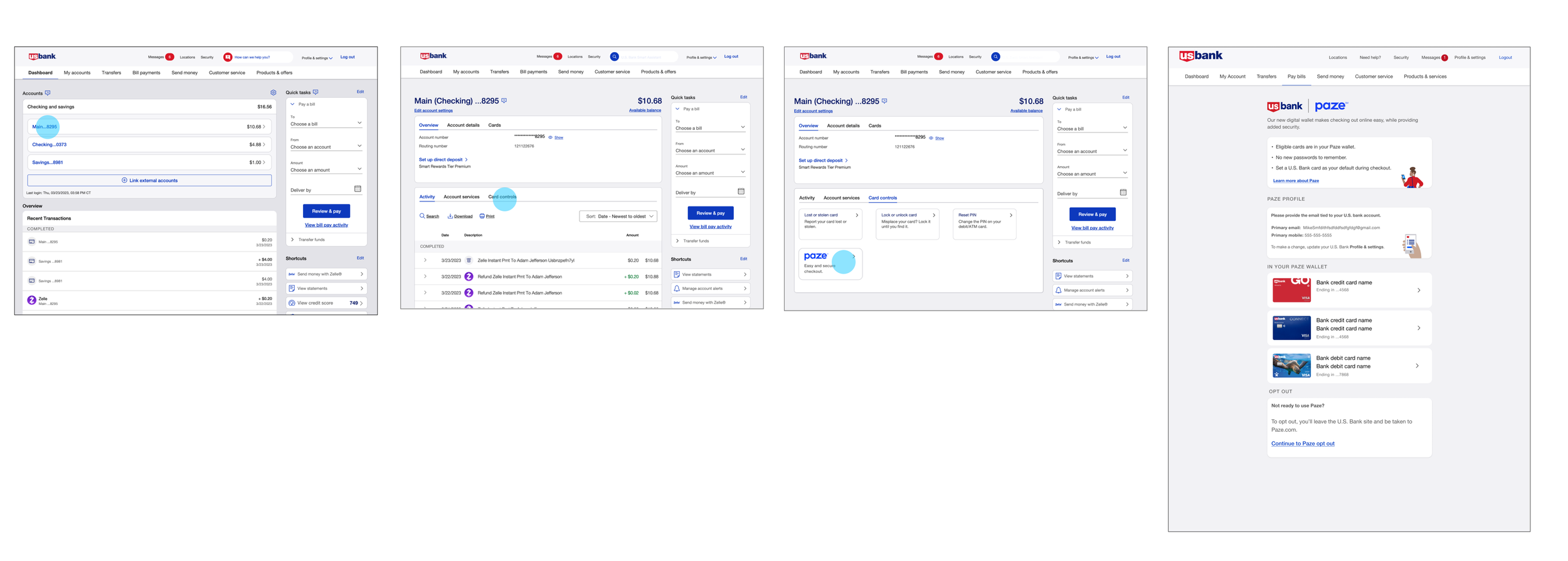
Adding and Removing a Card
Most wallet products make adding a card feel like a commitment: forms to fill, permissions to confirm, data that could be wrong. I stripped that down to three things that actually mattered. Eligibility shows up front, so nobody gets halfway through a flow before hitting a wall. Typing is minimal, since if the bank already knows the card, there's no reason to ask for it again. And the whole flow reads as reversible, something you can pick up and put down without a consequence attached to either action.
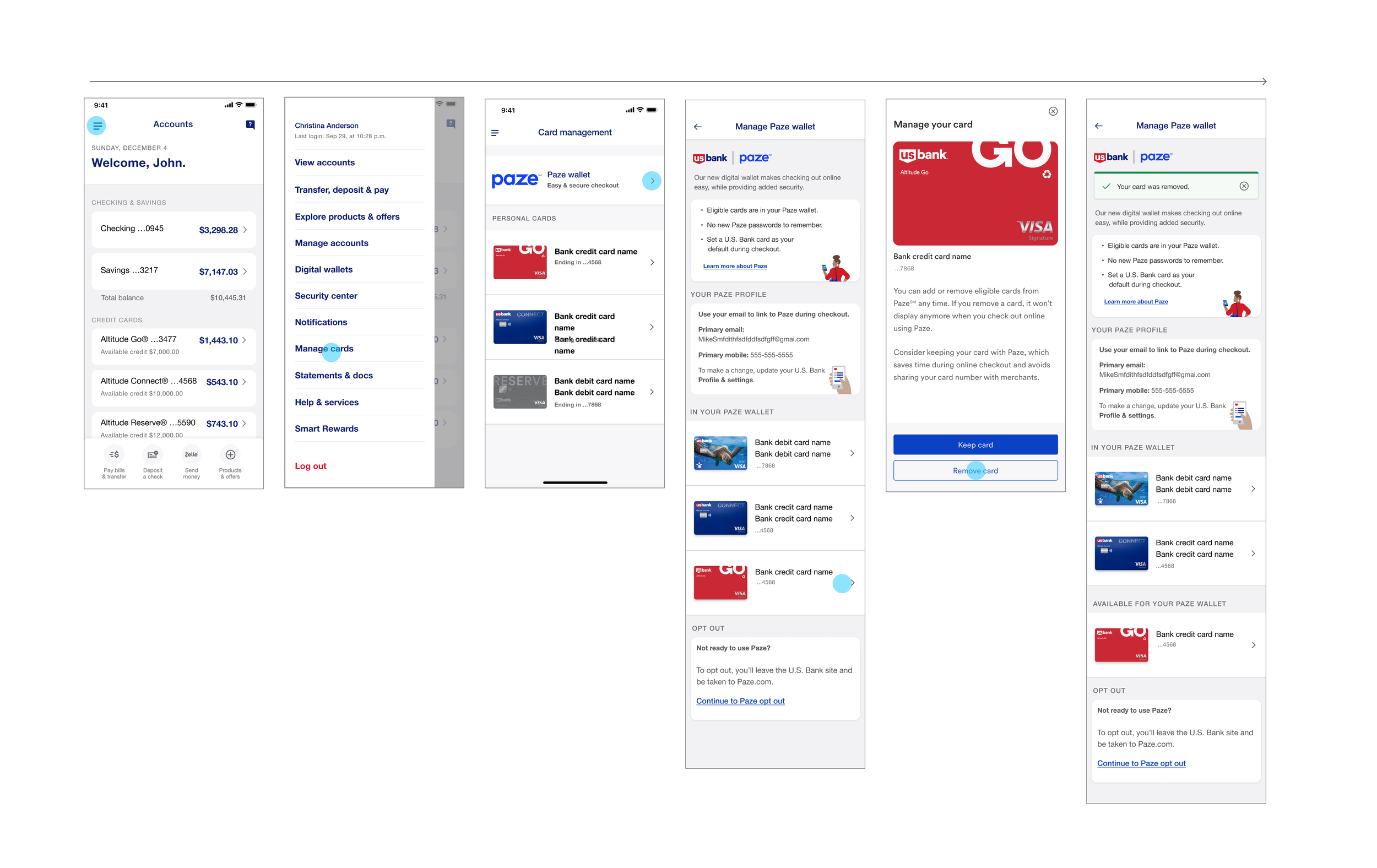
That last part turned out to matter as much on the way out as the way in. Removal flows get treated as an afterthought in most products, and that's a mistake, because how easy it is to leave tells a user everything about whether it's safe to stay. Removing a card shows exactly what's about to disappear, asks for a plain confirmation rather than a scare-tactic warning, and confirms immediately once it's done. A user who knows they're not trapped is a user who's willing to actually engage with the tool instead of treating it as something being forced on them.

Error States
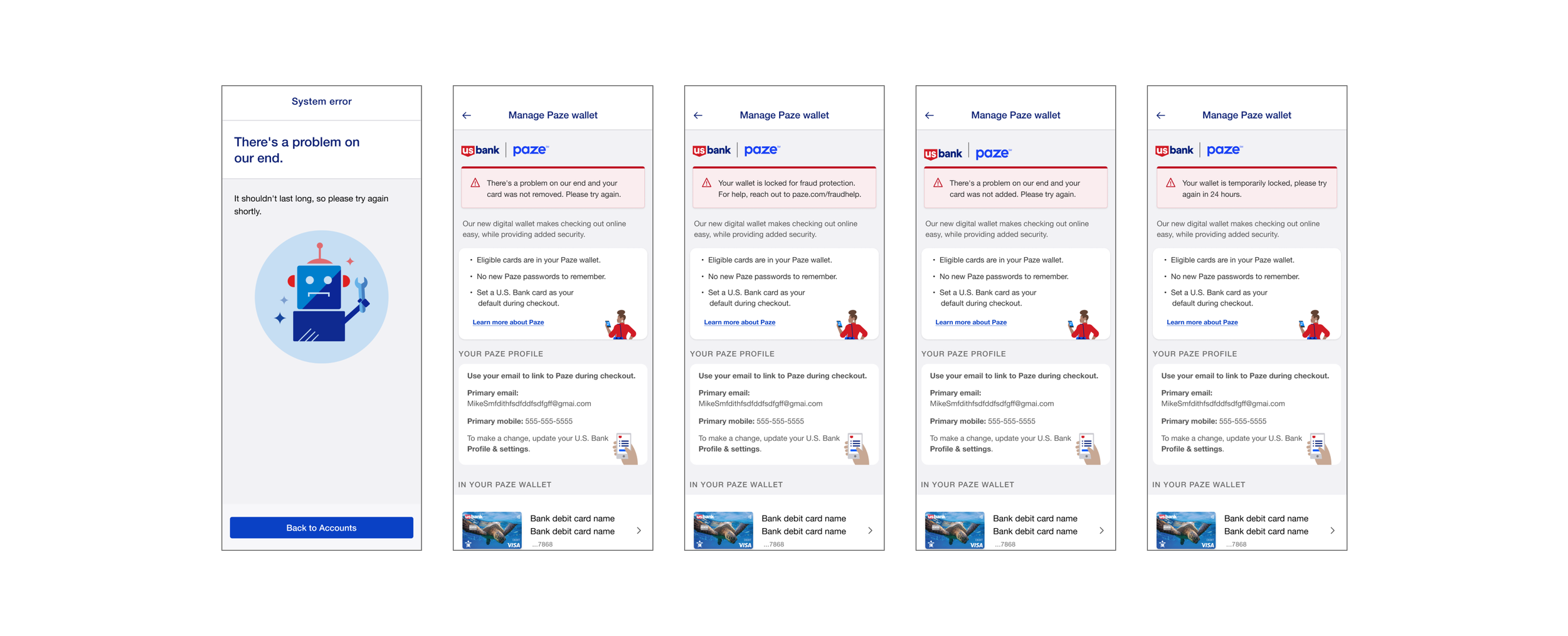
Payment fails. Systems go down. Cards get declined. A user hitting any one of those is already stressed before they read a single word on the screen, so the job of an error state here isn't to explain what broke, it's to keep that stress from compounding.
That meant plain language instead of technical status codes, no alarm-toned warnings dressed up to look more serious than the situation calls for, and a visible next step so nobody has to guess whether they should retry, wait, or start over. The user didn't cause the failure. The system did. Saying that plainly, and telling them exactly what to do next, is what keeps trust intact when something breaks instead of losing it right when it matters most.
The Outcome
Checkout abandonment dropped, completion got faster, and people who used the wallet once came back to use it again instead of reverting to typing a card number by hand. The number I actually cared about wasn't the completion rate. It was the shift underneath it, users stopped treating the wallet like a risk and started treating it like a tool they reached for without thinking about it.
That shift is the whole point of this project. Trust, speed, and clarity don't trade off against each other when they're designed to work together. Friction disappears, the transaction finishes, and the business and the user end up on the same side of the outcome instead of pulling against each other.
What I'd Tell the Next Person Doing This
Remove decisions before you add them. Every choice a checkout flow asks someone to make is a place they can stop and reconsider whether to keep going. Trust in a financial product lives in transparency and reversibility more than in any lock icon you can put on the screen, let someone see exactly what's happening and undo it easily, and they'll take the risk of trying it in the first place. And security should never announce itself. The best version of it is quiet, solid, and never once in the way of the thing the user actually came to do.