

How Rihanna Learned From Failure That Wasn't Hers
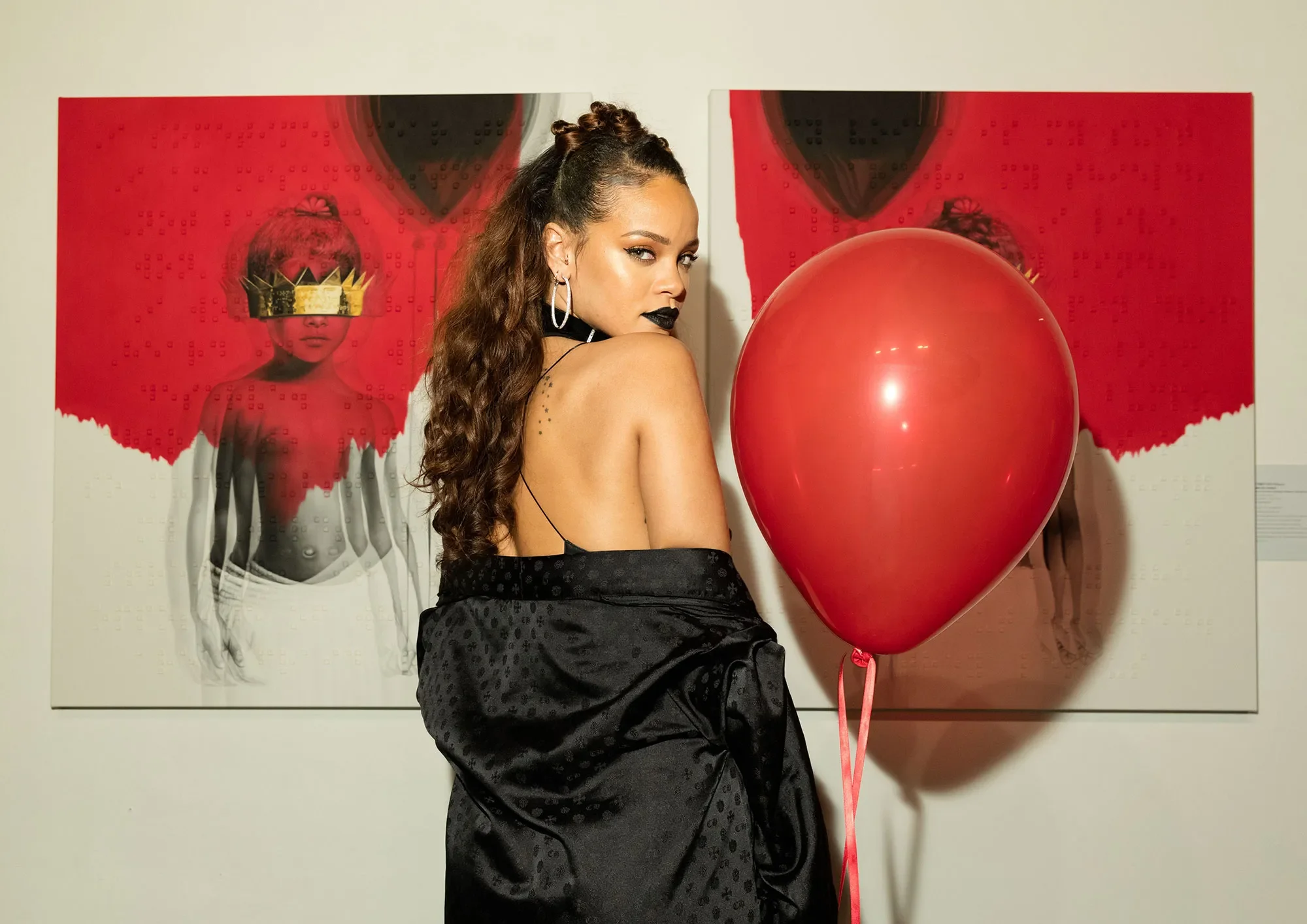
January 28, 2016. 12:01 a.m. EST. The servers held.
One million four hundred thousand people downloaded an album in 15 hours using a single code: the word "ANTI." Rihanna had tweeted it out. Seven hundred and five thousand tweets about Rihanna on a single day. The lead single "Work" shot to number one in 91 countries. Within 15 hours, the album was certified Platinum. The RIAA's servers processed the data without flinching. Everything worked exactly as designed.
This was a masterclass in learning from someone else's catastrophe. Every detail had been engineered.
Three years earlier, Jay-Z had taught the industry what happens when you prioritize corporate infrastructure over fan experience. Magna Carta Holy Grail became a case study in weaponizing an artist's credibility for data extraction.
When Samsung came knocking with a $25 million offer for Rihanna's eighth studio album, they had a choice: take the money Samsung's way, or forge a different path.
The Lesson That Cost a Corporate Artist a Grammy
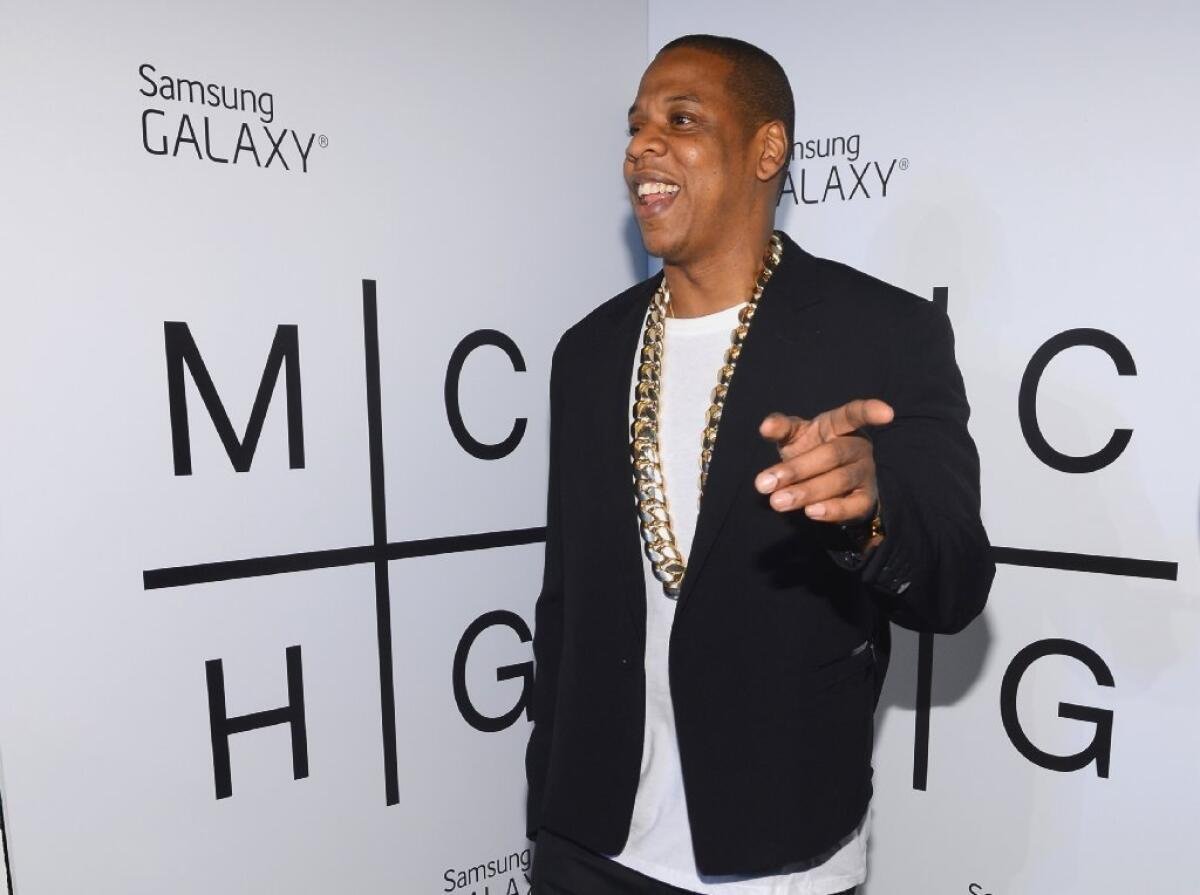
Start with Jay-Z's missteps to see what Rihanna got right.
Samsung bought one million copies of Magna Carta Holy Grail for $5 million upfront. The album was profitable before reaching a fan. Jay-Z framed it as the "New Rules." The commercial logic was sound.
The implementation revealed everything. Users had to install an app that demanded location data, call logs, app lists, and the ability to post on Facebook and Twitter without permission. The Electronic Privacy Information Center filed an FTC complaint. Critics called it "NSA-style" surveillance wrapped in a celebrity gift.
Fans clicked "free album" and were met with requests for their private data. When servers crashed at midnight, the facade collapsed. More than 200,000 people chose torrents instead.
The album went number one. Jay-Z defended it aggressively. But what he lacked was perspective. You can sell an album by trading your fans' privacy. That cost persists long after servers stop crashing. It shows up in how fans perceive future partnerships.
The Seven-Month Negotiation and the Question Everyone Asked
When the Rihanna Samsung deal was announced in October 2015, the industry's first question was immediate: Are they doing that app thing again?
The answer came through structure. Seven months of negotiation (not a typical 30-day sprint) signals awareness of specific problems. Roc Nation and Samsung had the New York Times critique, the FTC complaint, and documented server failures as institutional memory. Repeating the same approach would backfire harder.
The deal value alone told you something had shifted. $5 million in 2013 became $25 million in 2016. A fivefold increase. But the structure moved beyond a simple bulk purchase. Samsung wasn't buying one million copies of a digital file to give away via an app. Samsung was funding the album's promotion, the subsequent Anti World Tour, and a narrative experience that would redefine how a superstar could release music.
The negotiations involved Jay-Z and Rihanna's manager Jay Brown. The same Roc Nation team that had brokered the 2013 deal. This was institutional expertise recognizing an opportunity to correct a design flaw so significant that it had turned a moment of commercial triumph into a cautionary tale about trust.
What Samsung needed from the partnership was simple: a way to launch the Galaxy S7 with cultural credibility. What Rihanna needed was a structure where corporate money could fund creative freedom, but only if she controlled the experience architecture.
The result was a deal structured around one core principle: extract narrative, not data.
ANTIdiaRy and the Death of the Mandatory App
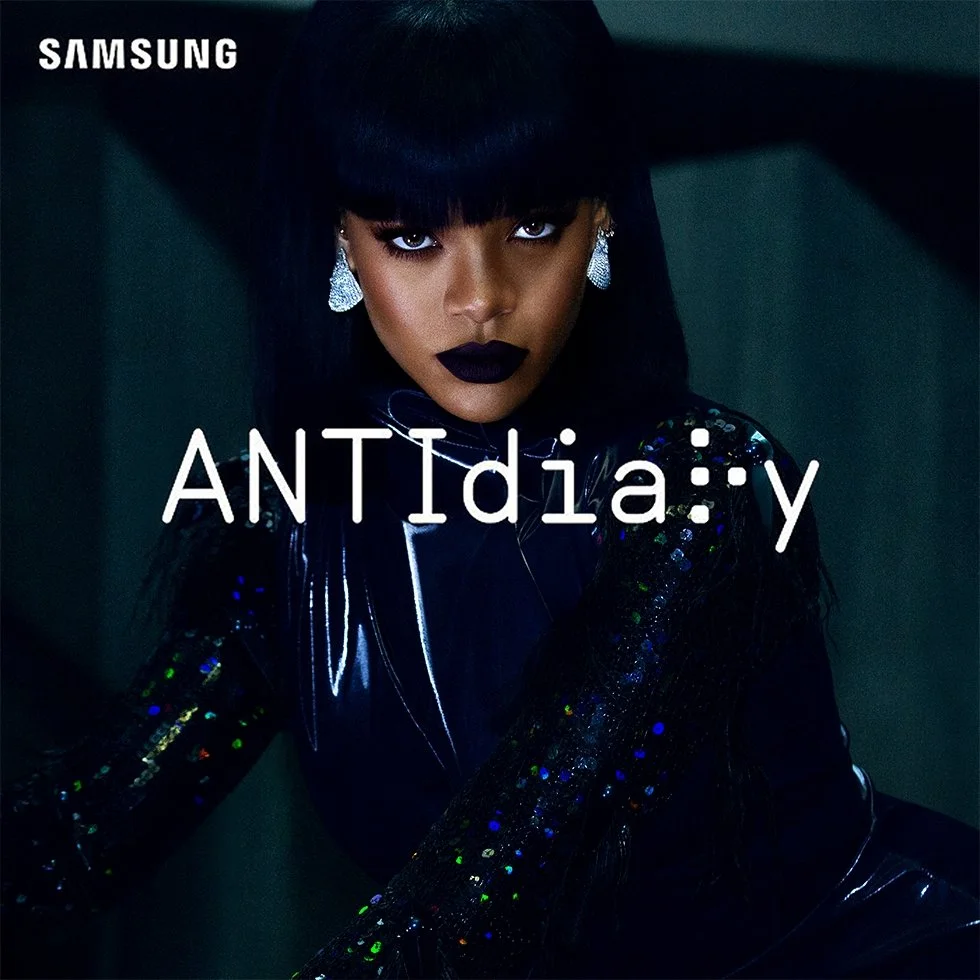
The most visible evidence of the correction was architectural simplicity. Rihanna's team designed around the Magna Carta failures: no proprietary app, no mandatory installs, no permission requests, no forced social media posts.
Instead, Rihanna's team (working with agencies 72andSunny and R/GA) created ANTIdiaRy, a mobile-optimized web experience. This was a complete architectural redesign.
Web browsers operate within sandbox constraints. They access only what users explicitly grant: no call logs, no location data, no app lists. The technical constraints made the privacy backlash impossible by design. The ethical problem solved itself through the medium.
But the deeper shift was ANTIdiaRy itself. The website contained eight virtual "rooms" representing Rihanna's previous albums, from "Music of the Sun" to the "ANTI bedroom." Users walked through a museum of her artistic evolution instead of downloading an app.
This pivot changed the fundamental transaction. In 2013, fans gave Samsung their data for Jay-Z's album. For Anti, fans spent nine weeks exploring Rihanna's career before the January 28 release. By then, the Navy had invested time and emotional energy. The download felt earned. The currency was attention and participation, not privacy extraction.
The Code, the Leak, and the Flawless Execution
On January 27, Rihanna tweeted a single word: "ANTI."
That word was a promotional code. You entered it on the Tidal landing page. The album streamed immediately on Tidal or downloaded as high-quality audio files. You also received a 60-day free trial of Tidal, with audio files in your email.
Hours before the launch was official, a metadata leak caused Anti to appear on Tidal early. Tidal executives blamed Universal Music Group for the error. The leak was a technical failure that created an accidental advantage. Fans were already downloading the album when the official release window opened. The momentum was in motion before midnight.
This is crucial: by the time the official launch window opened, the servers had nothing left to prove. The infrastructure was already handling millions of concurrent transactions. Midnight arrived as an afterthought. The servers simply continued doing what they had been doing for hours. The technical miracle was invisible.
Compare this to July 4, 2013. Midnight EST. The Magna Carta app crashed. Servers overloaded. Users reported login failures. A representative tweeted "Woah. We broke the Internet," trying to frame the disaster as proof of overwhelming demand. What users experienced was friction. Hours of it. By the time the servers recovered, the damage was done. The cool had evaporated. The corporate machinery was visible and malfunctioning.
For Anti, everything moved through Tidal, a dedicated music service (launched 2014) designed to handle millions of concurrent listeners. One million four hundred thousand downloads in 15 hours. Platinum certification within hours. The infrastructure held. The corporate sponsorship became invisible.
The Brand Archetype That Made All the Difference
The same basic deal exists in both cases. A tech giant buys a million copies. A superstar's album becomes instantly profitable. The structure is nearly identical. The outcome could not be more different.
Jay-Z's public persona is rooted in the "Mogul" archetype. When he launched Magna Carta, he led with business logic. The "New Rules." The structural victory. Fans experienced enrollment in a commercial transaction.
Rihanna operates under a different archetype. The "Rebel." An artist who does what she wants, when she wants. When the Anti deal arrived, her brand made it feel like a heist, not a sell-out.
Her release-day tweets proved it: "1 MILLION in under 15 hrs!!!! NAVY R die!!!! Thank u to all my fans and @samsungmobileus." Fans first, Samsung second. This authentic framing worked where Jay-Z's defensive "how am I cheating?" had failed.
The Navy and the Culture of the Gift Economy
There is measurable data about Rihanna's fanbase. Studies show that the Navy is 3.7 times more likely to buy products Rihanna endorses than the average celebrity fan. This is not casual loyalty. This is "unparalleled devotion."
The Anti release deepened that devotion. The Navy perceived it as a gift. Rihanna used Samsung's resources without demanding anything except optional Tidal trials. She offered a code. Downloads were optional. Permissions were minimal.
The ANTIdiaRy campaign let fans explore on their own time or skip it entirely and wait for January 28. Samsung's money created abundance, not extraction.
This distinction reveals something important about modern fandom. Fans will participate in corporate sponsorships if the design treats them as people with agency rather than data sources with browsing habits. The Navy did not resist the Samsung partnership. They participated in it because Rihanna's brand had established enough credibility that they trusted her judgment.
The Design Shift That Changed the Industry
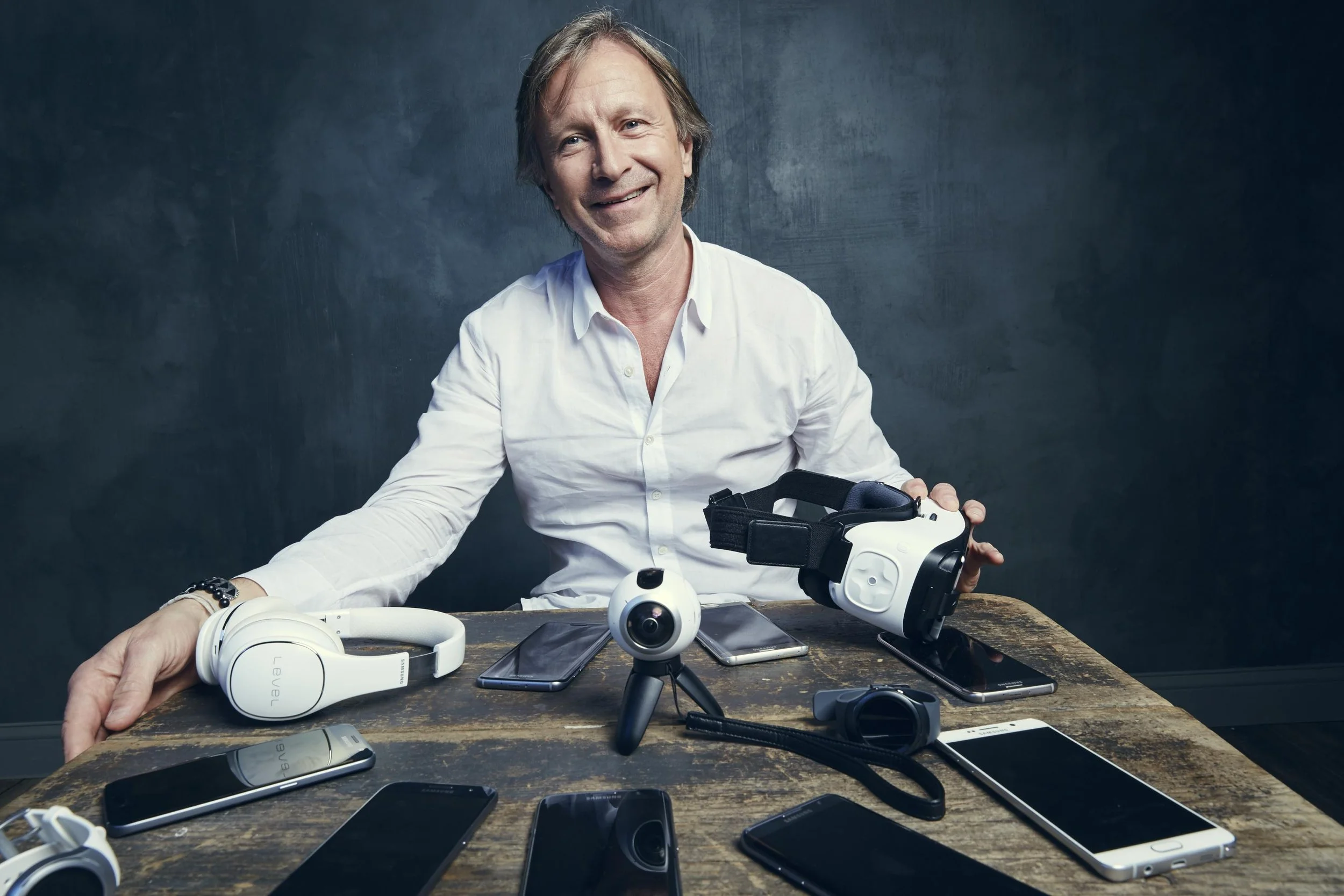
Marc Mathieu joined Samsung as CMO in 2015 and found a brand needing psychological reset after Magna Carta backlash. He repositioned Samsung as "human-first": Be Human. Be Real. Be Iconic. His philosophy held that marketers have an "ethical responsibility" to ensure technology improves human experience. This rebuked the cold, transactional nature of 2013. The EPIC complaint had documented Samsung's data collection as "unnecessarily invasive" and "deprived users of meaningful choice." Mathieu's appointment signaled awareness and a will to rebuild.
Anti became the flagship project for this rebranding. Samsung positioned itself as a patron of the arts instead of a data-mining operation. The $25 million was an investment in creative freedom, not a transaction. The web-based ANTIdiaRy experience embodied this shift: no system-level permissions, no data harvesting, just narrative space.
The Certification Controversy and the RIAA Pivot
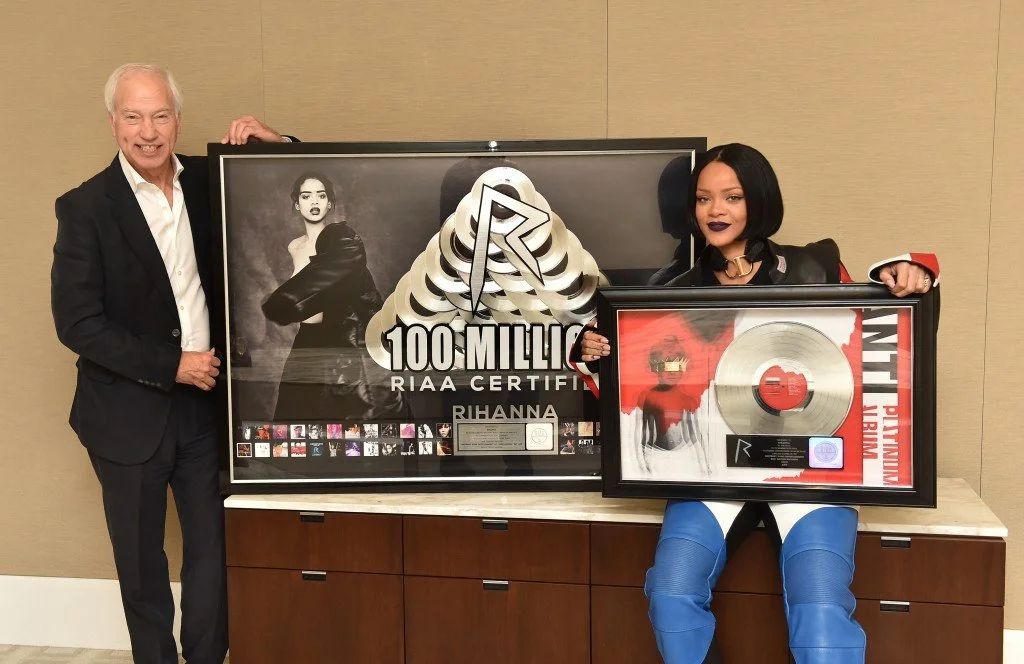
Within 15 hours, Anti had 1.4 million downloads and Platinum certification. The RIAA changed its rules on February 1, 2016—just days later. The new standard equated 1,500 song streams to one album sale, shifting from "physical shipments" to "digital attention." Streaming counted now. Corporate subsidies became legitimate.
Billboard, though, refused to count Samsung downloads toward charts. Anti debuted at number 27 based on paid streams, then jumped to number one the following week with 166,000 legitimate sales. The discrepancy revealed complexity: you could be Platinum while debuting at 27. The metrics had shifted but the rules were still catching up.
How the Same Deal Became a Different Story
The facts are nearly identical. One million copies subsidized by a hardware company. An artist's credibility funding a brand's cultural relevance. A superstar's album becoming instantly profitable. A marketing campaign disguised as fan service. In 2013, this was a scandal. In 2016, this was a masterclass.
The difference was in the architecture. The Magna Carta app demanded system-level permissions. The ANTIdiaRy website required only browser access. The difference was in the narrative frame. Magna Carta was about business rules. Anti was about artistic evolution. The difference was in fandom. Jay-Z's fans experienced a transaction. Rihanna's fans experienced a gift.
None of this was accidental. The seven-month negotiation period was time spent working through how to execute Samsung's capital without triggering the privacy backlash that had defined the Magna Carta release. Marc Mathieu's "humanity-first" mandate at Samsung created the philosophical space for a design approach that prioritized narrative over data. Rihanna's established brand equity allowed her to frame the corporate sponsorship as something she was doing for her fans, not to them.
For an experience strategist, the Anti release represents the evolution of how corporate-artist partnerships handle the trust transaction. You cannot hide the machinery. You cannot pretend it doesn't exist. But you can make the machinery serve the narrative instead of the reverse.
The Long-Term Legacy and the Invisible Design
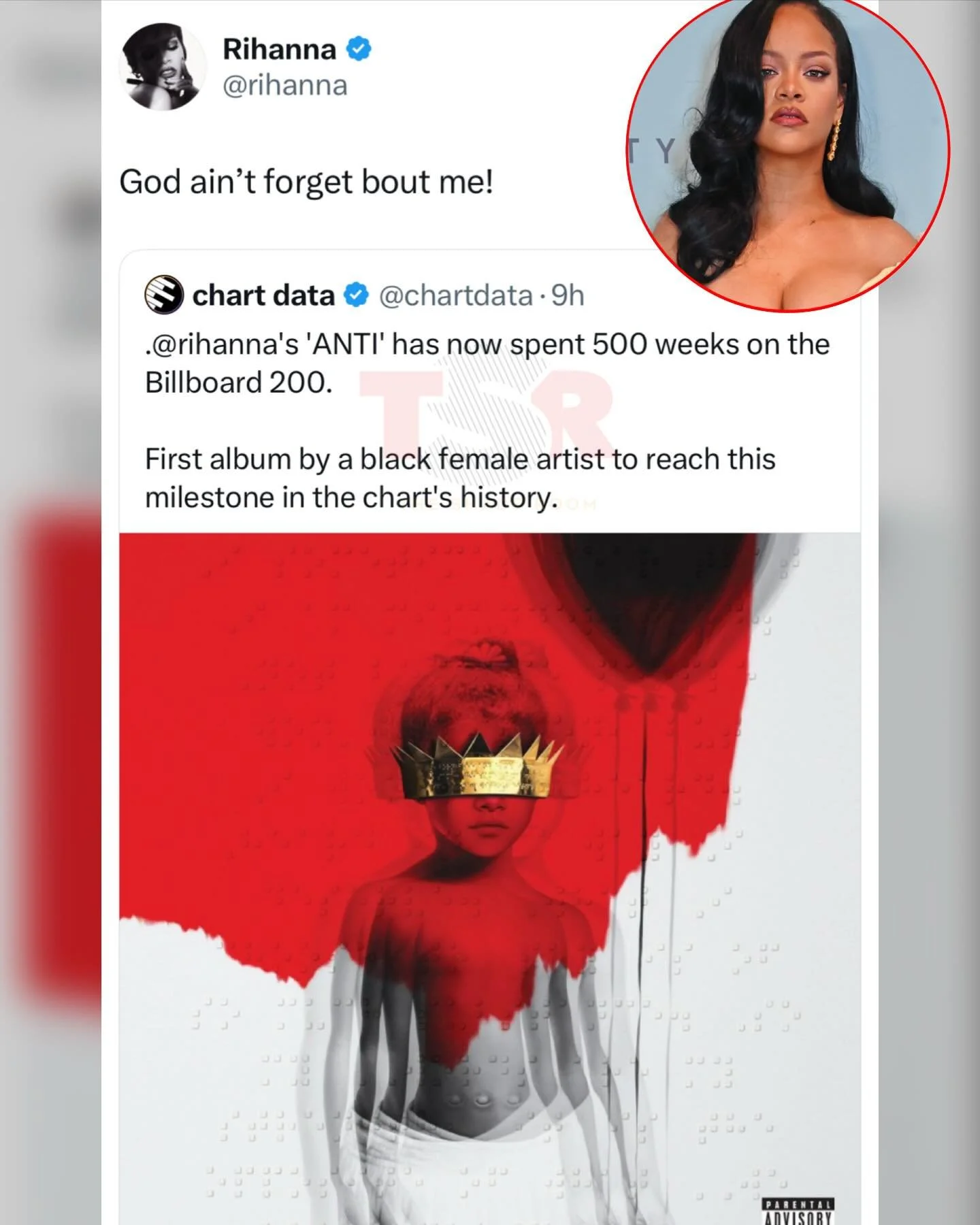
Anti is now critically acclaimed as one of the definitive albums of the 2010s. It's on "Greatest Albums" lists from Billboard, Pitchfork, and NME. In December 2025, it became the first album by a Black female artist to spend 500 weeks on the Billboard 200. The "messy" rollout has been completely overshadowed by the album's artistic achievement.
This is the highest form of design success. The distribution experiment became invisible. The corporate machinery became irrelevant. All that remains is the music and its impact.
For my money, this invisibility reveals what Rihanna understood that Jay-Z did not. You cannot defend a corporate transaction by explaining the business logic. You can only legitimize it by making it serve something larger than itself. Jay-Z tried to make the "New Rules" about artist agency and industry evolution. The result felt corporate. Rihanna made the release about giving her fans access to her artistic vision. The result felt authentic.
The difference was tone. Jay-Z operated from a defensive posture. Rihanna operated from a sharing posture.
The Institutional Adoption and the Correction as Education
The difference between the Magna Carta Holy Grail release and the Anti release is a case study in learning from failure that wasn't yours. Rihanna's team studied Jay-Z's missteps. They understood the regulatory backlash, the privacy violations, the server failures. They made decisions that corrected for those specific problems.
This is institutional learning at scale. A major artist's team observed another major artist's mistake and made structural decisions to avoid it. The result was a release strategy that became the model for the streaming era. Rihanna didn't invent the corporate partnership. She invented how to execute it without triggering the backlash that had defined the previous attempt.
In 2017, Jay-Z applied the Anti model to "4:44" with Sprint as partner. The same dual-exclusive structure: streaming through Tidal, downloads through the corporate deal. One million copies. This confirmed Anti was not a one-off but a functional redesign of how major artists could release music in the streaming era. Roc Nation adopted the narrative-first, utility-second model. The mandatory proprietary app was dead.
But the Anti model persisted. Other artists studied the rollout. Other companies watched how successfully Rihanna had used corporate money to create narrative momentum. The pattern became: find a streaming partner, find a corporate sponsor, create a story that makes the corporate machinery feel like fan service, and launch with infrastructure that doesn't require invasive system permissions.
For Samsung, the evolution was equally profound. The company moved from "tech for tech's sake" to "tech for humanity's sake." The shift from Marc Mathieu's appointment through the Anti partnership demonstrated institutional will to reposition after a reputational hit. Samsung had been the villain in the Magna Carta story. By 2016, Samsung was a patron of the arts.
Neither party had to acknowledge the previous failure directly. The structure of the new deal was the acknowledgment. The seven-month negotiation was the confession. The web-based narrative experience was the apology. The transparent, non-invasive design was the promise that this time would be different.
And it was.
That's the lesson: make the corporate machinery serve something larger than itself. Make it transparent. Make it meaningful. Make it feel like partnership. Anti did that. It corrected Magna Carta's mistakes and established a new baseline for how modern icons operate in a post-ownership economy. Where attention is the commodity, narrative is the infrastructure, and corporate machinery is invisible because it's being used to tell a story fans want to join.
That's what happened when Rihanna learned from a failure that wasn't hers. It taught her everything.