

The Day Jay-Z Taught Us What Consent Actually Costs
On June 16, 2013, Jay-Z bought a three-minute commercial slot during Game 5 of the NBA Finals to announce a new album. In three weeks, the first one million people with a Samsung Galaxy phone could download Magna Carta Holy Grail for free. A $15 album, yours. Just download the app.
For about forty-eight hours, this felt genius.
The music industry was dying. Physical sales had collapsed. Samsung paid $20-30 million total ($5 million upfront for one million copies). Jay-Z framed it as the "New Rules": artist partners with tech company, gets paid upfront, removes financial risk, reaches millions. It looked like a masterclass in artist control.
Then fans tried to download the app.
The Trojan Horse in Your Pocket
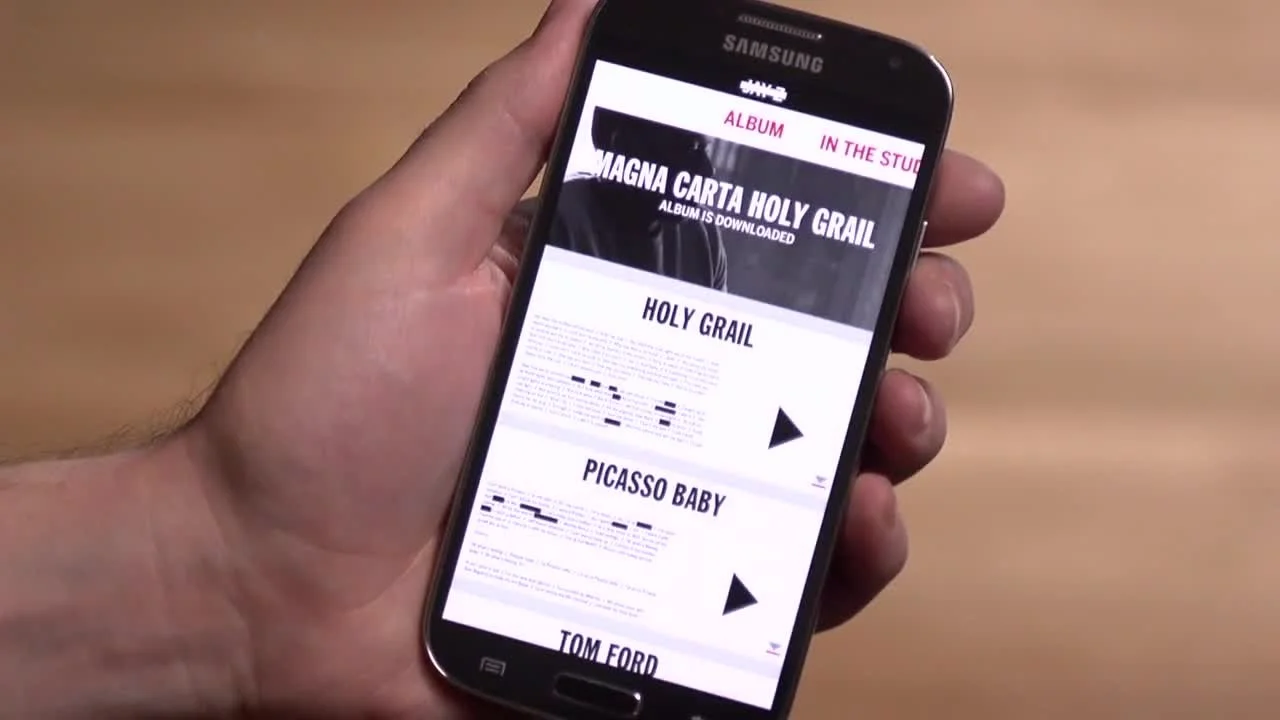
The app hit Google Play on June 24 asking for location data, call logs, installed apps, and network connections. To unlock lyric sheets, you had to post on Facebook or Twitter. The album was free, but the currency was your privacy, served to Samsung's databases.
Ars Technica called it "positively PRISM-like." Two weeks after Snowden's NSA revelations. Jon Pareles of the New York Times wrote, "If Jay-Z wants to know about my phone calls and email accounts, why doesn't he join the National Security Agency?" The Electronic Privacy Information Center filed an FTC complaint that Samsung had "failed to disclose material information."
The marketing said "free." The messaging said "gift." But the permissions list told the real story. You were a data source. Samsung was using Jay-Z's credibility as cover to extract information unrelated to music delivery. The Trojan Horse was the artist himself.
Rapper Killer Mike understood immediately. He tweeted "Naw, I'm cool" after seeing the permissions. If a fellow artist rejected it, something was fundamentally wrong.
The Technical Collapse and the Accidental Honesty
July 4, 2013. 12:01 a.m. EST. Servers crashed.
One million people tried downloading simultaneously. The login failed. The "White Glove" experience shattered into error messages. A representative tweeted "Woah. We broke the Internet."
Fans had already surrendered location data, call logs, and social identity. They had already clicked "I agree." And got broken servers in return.
Within hours, the album leaked to BitTorrent. Over 200,000 downloads in a single day through torrent sites. The official channel was so invasive and broken that more than 200,000 people chose illegal file-sharing. When the official path is more difficult and invasive than the unofficial path, people will choose the unofficial path. Every time. You had built friction where you needed to build trust.
The Regulatory Scramble
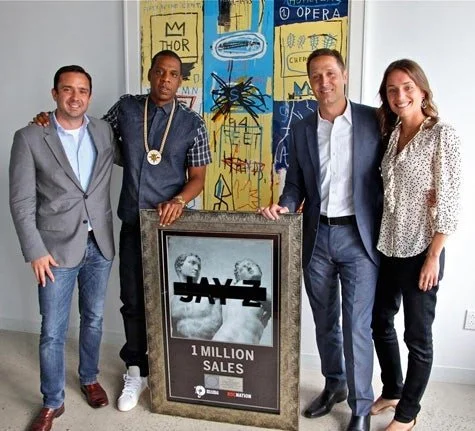
The deal forced an institutional reckoning. The RIAA's 30-day waiting period existed because stores returned physical inventory. Samsung's bulk purchase was different. They weren't a retailer. The RIAA eliminated the waiting period for digital albums.
Magna Carta Holy Grail became platinum on day one. The album hadn't been heard by the public yet.
Billboard refused to count Samsung purchases toward charts. Jay-Z had platinum certification but no number-one debut. He had to wait three days for the retail release.
Jay-Z responded characteristically: "Even after I do what I do... the album goes number one by their traditional rules... so okay don't count that if you don't want... how am I cheating?" He embedded the argument into the music itself, rapping on "Somewhere in America": "By the way, f--- your math / You ain't gotta count it my n----, I can add / 1 million, 2 million, 3 million, 20 million... Might crash ya Internet / And I ain't even into that."
The album did hit number one. 527,000 copies sold in the first retail week. Jay-Z won the commercial bet.
The Privacy Backlash and the Unresolved Tension
Jay-Z's brand was the collateral. Samsung used his credibility the way a con uses an expensive suit. It made the extraction feel legitimate. The marketing message was "culture." The technical reality was "commerce." When the servers failed, the gap became visible. Fans were dealing with a hardware company's infrastructure, not a mogul. What remained was the clinical nature of the data collection, the forced social media posts, the mandatory permissions.
Jay-Z acknowledged the privacy concerns briefly ("Sux, must do better"), but he largely deflected the deeper issue. He spent his public energy defending the commerce of the deal, proving that the album charted at number one and sold over 500,000 copies in its first week. He addressed the financial victory. He did not address the fundamental question: at what point does a brand partnership stop being a distribution innovation and become a breach of trust?
That question is still unresolved.
The U2 Comparison and the Limits of Imposition
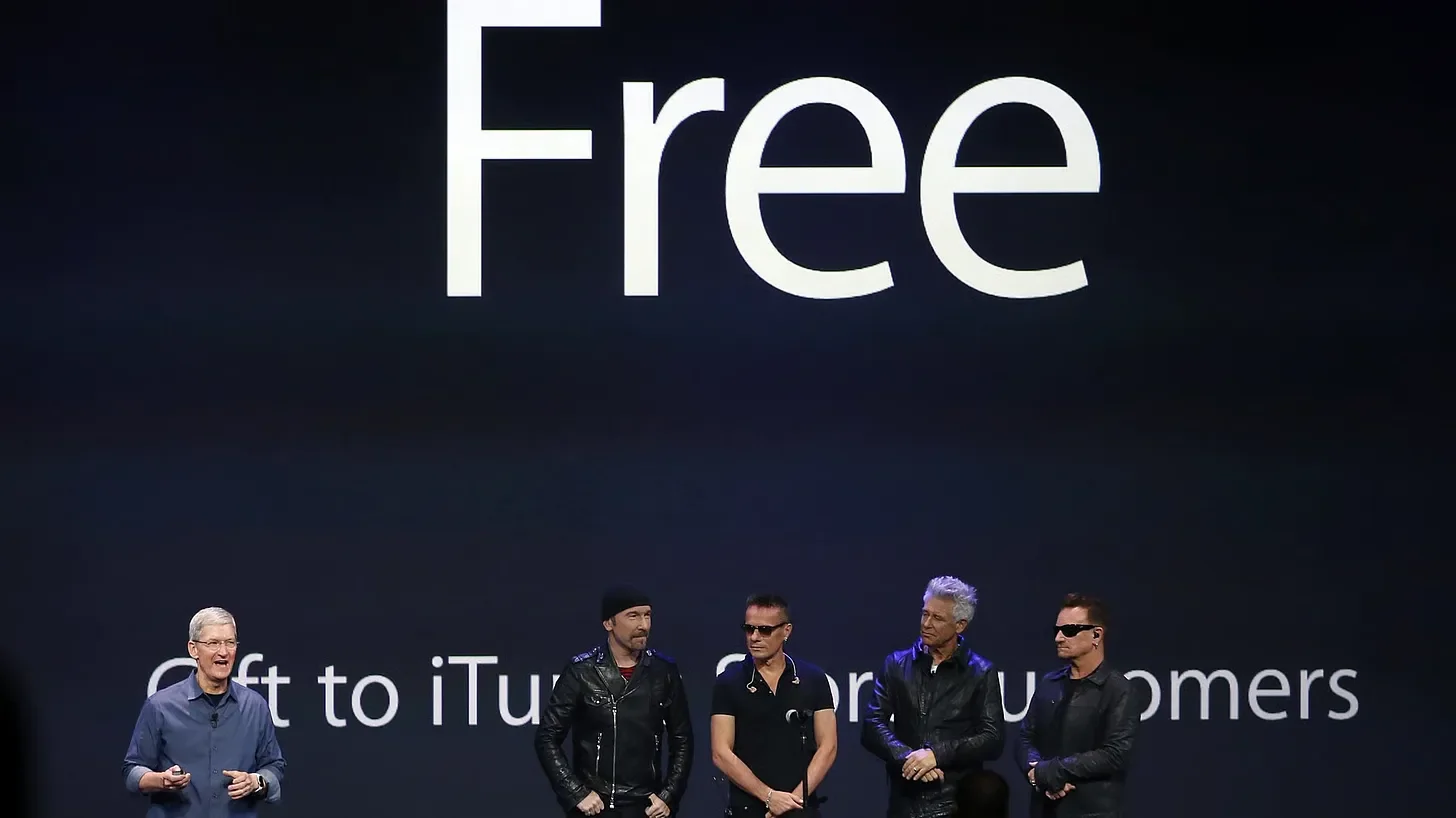
A year later, U2 and Apple tried a similar experiment with Songs of Innocence. Apple paid an estimated $100 million to place the album into the iTunes libraries of 500 million users without their consent. Automatically. No opt-in. Just there.
The backlash was worse. Users compared it to being "hacked." Tweets filled with variations of "why is U2 in my phone?" The album became a symbol of corporate overreach. Apple was eventually forced to create a dedicated, one-click removal tool, a technical admission that the design had failed.
Jay-Z required users to surrender agency and privacy voluntarily. U2 didn't ask for permission at all. One was a high-friction transaction. One was an invasion. Both revealed the same unresolved tension: the point at which corporate partnerships become something that damages the relationship between artist and fan.
Jay-Z maintained fan agency through the opt-in. The price he paid for that agency was the invasiveness of the permissions. U2 removed the choice entirely. For my money, the Jay-Z deal was a more honest failure. It showed the machinery explicitly. You saw what you were trading. U2's deal was a friendlier deception.
The Architecture of Consent
In experience design, there's a concept called the "halo effect." When you do something nice, people feel positive toward you. Samsung tried to weaponize that halo. Jay-Z's credibility would make the brand feel generous. The gift narrative would override privacy concern. Users would click "I agree" without reading permissions.
It almost worked. If the servers had held, if the download had been seamless, the halo might have carried the entire transaction. People would have told themselves the data collection was worth it.
Instead, midnight came and the machinery broke. The servers crashed. The app failed. That was the moment the halo collapsed. Fans realized they had already surrendered their privacy for nothing. The album wasn't even downloading yet.
When the official channel is that broken, people find unofficial ones. 200,000 torrent downloads in a single day. The entire value proposition collapsed.
The New Rules and the Old Tension
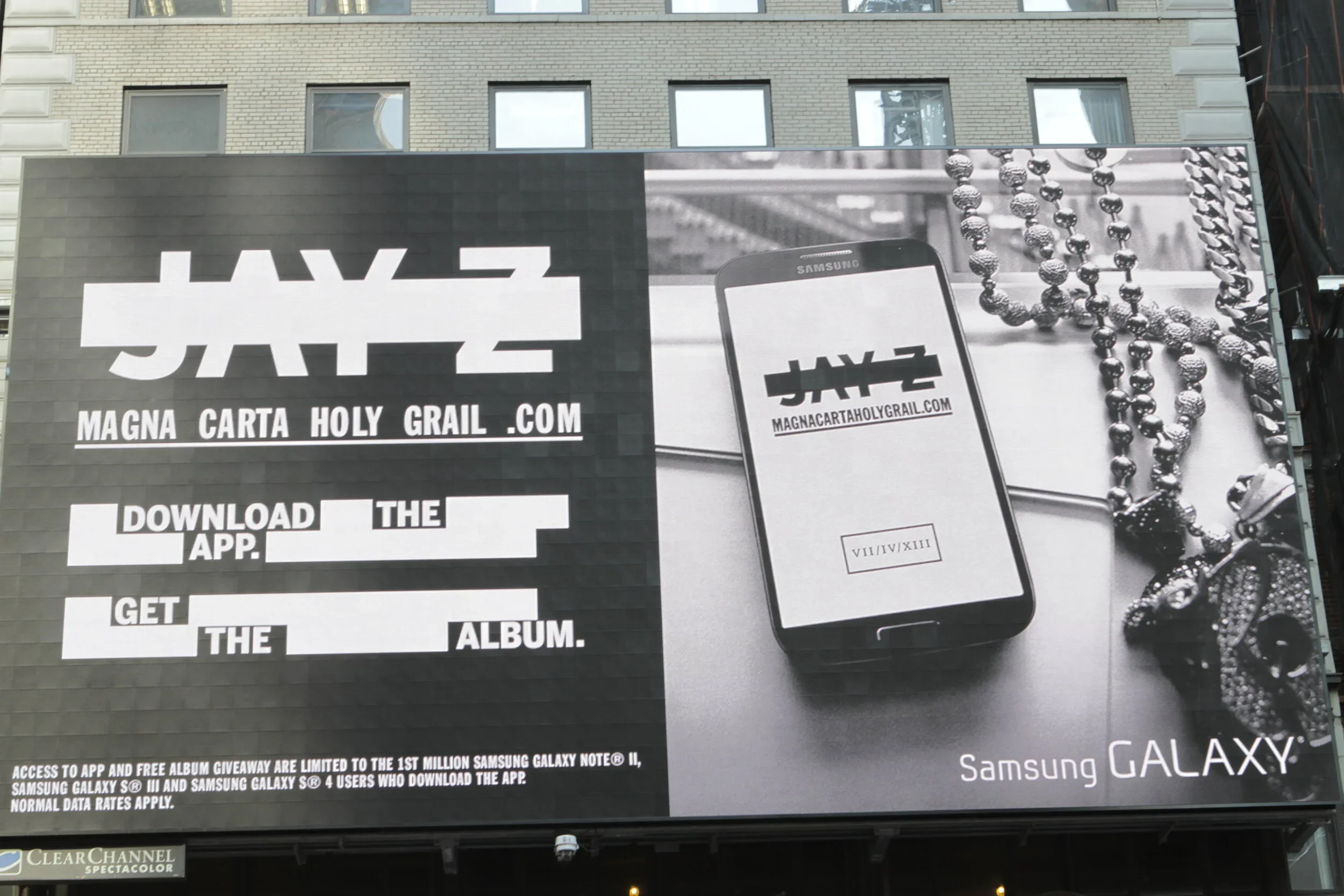
Jay-Z called it the "New Rules." What he meant was this: in a dying industry, you find unconventional partners. You sell to brands. You use their infrastructure. You ensure profitability before the public ever hears the music. You move faster than the traditional system allows.
Moving faster doesn't resolve the central tension. The artist wants direct access to fans. The brand wants access to data. These two things are fundamentally incompatible. Jay-Z wanted both. Samsung wanted both. But fans, real actual human fans, only wanted the music. When you make them choose between the album and their privacy, they'll choose the illegal copy.
Jay-Z secured $5 million upfront and proved a new distribution model. Samsung achieved massive brand awareness and cultural placement. Both won commercially. They lost something that mattered more: the trust transaction between artist and audience.
The album still charted at number one. 527,000 copies sold. All the metrics looked good. But there's a reason Samsung didn't do the Magna Carta model again. There's a reason Jay-Z moved to TIDAL, where he could own the distribution directly. The brand could never quite wash off the association with extraction.
In the digital age, the most valuable commodity is consent. Once consent is weaponized, once it becomes a data source instead of a voluntary agreement between artist and audience, even the world's biggest artist can't fully mask what's happening underneath.
The "New Rules" were supposed to free artists from the industry. Instead, they revealed how easily artists can become distribution channels for something else. Something the fan never agreed to trade for, no matter how much that fan loved the music.
Whether Jay-Z understood that at the time is an open question. Whether Samsung understood it is not. They've never done it again.